
Augmentative & Alternative Communication Devices for Autism: A Guide for Parents
How Speech-Generating Devices Help Kids Communicate
Experts: Keri Morgan, MS, CCC-SLP, and Chelsea Nall, OTR/L, CSRS, ATP
At-a-Glance Summary:
Augmentative and Alternative Communication (AAC) devices for autism help children communicate using speech-generating technology, pictures and words. These tools can reduce frustration, improve social interaction and support speech development. In this guide, experts explain the benefits of AAC devices, how they work and how to know if your child may benefit.
Key Benefits of AAC Devices for Autism
- Helps children express needs and emotions
- Reduces frustration and behavioral challenges
- Supports speech and language development
- Improves social interaction
- Builds independence
AAC Devices for Children with Autism
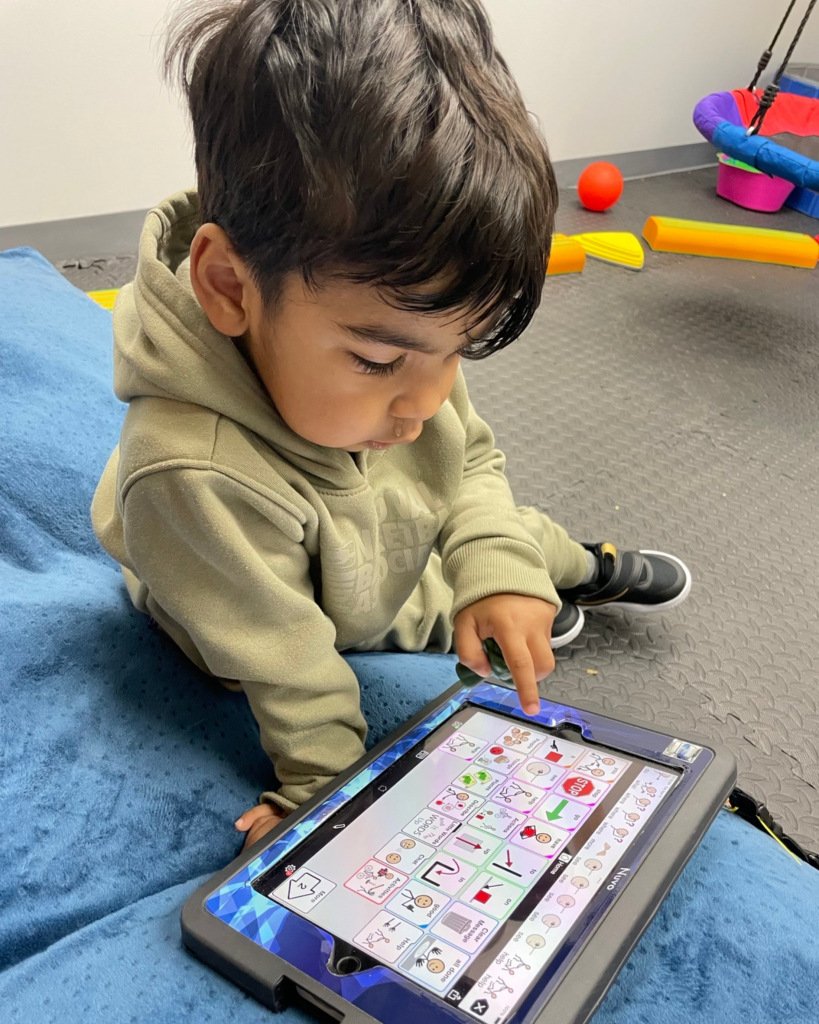
If you’re raising a child with Autism Spectrum Disorder (ASD), you often know there’s more going on inside than what you’re seeing or hearing. You see the understanding and feel the connection — but, sometimes, getting those thoughts, needs and emotions out into the world can be a challenge for kids with ASD.
“The language and communication, it’s there,” said Chelsea Nall, a National Seating & Mobility Assistive Technology Professional (ATP), occupational therapist (OTR/L) and mom of a child who uses a speech device. “It’s that I don’t know how to access what he has inside, and a speech generating device is a tool that provides access.”
That’s what AAC devices do: provide access to reliable communication for individuals who struggle with verbal communication.
For kids with autism, AAC devices can help bridge the gap between what your child wants to say and what they’re able to express. These communication devices for ASD range from simple picture-based tools to sophisticated speech-generating technologies — and the right fit depends entirely on your child. For many families, speech devices are life-changing tools that open up communication, reduce frustration and allow theirchild’s voice to be heard.
What Is an AAC Device?
AAC devices for autism are communication tools that help users express needs, emotions, thoughts and ideas using speech-generating technology, symbols, pictures or text. These devices can improve communication, reduce frustration, support language development and increase independence.
According to research from Helen Tager-Flushberg and Connie Kasari, an estimated 25-30% of children with ASD are nonverbal or minimally verbal and do not use speech as their primary form of communication. Children with ASD may benefit from the use of AAC devices, but these speech devices aren’t just for children who don’t speak.
Many children who use AAC devices:
- Have verbal speech but can be difficult for others to understand
- Have speech delays or struggle to form sentences
- Communicate primarily through behavior or repetition
Learn more about how to create a sensory-safe home environment for kids with ASD.
What Are Signs Your Child Needs an AAC Device?
Every child is different, but some common signs that a child could benefit from an AAC device include:
- Difficulty being understood, even if your child uses verbal communication
- Frequent frustration, meltdowns or behavioral outbursts that stem from not being able to communicate needs, wants or emotions
- Using repeated phrases or scripts (from shows, songs or routines)
- Limited ability to start or maintain conversations
- Relying on gestures, pointing or behaviors to communicate
“If your child is having difficulty being understood by other people, it is worth exposing them to an AAC device,” said Keri Morgan, MS, CCC-SLP, and an AAC Consultant with RM Speech. “It doesn’t matter what diagnosis you have or how old you are. If you have difficulty communicating, an AAC device may be a tool that can help.”
NSM offers RM Speech Devices and their Software Partners to provide IOS and Android-based systems that can be accessed through touch, eye gaze, switches or a stylus. We work with families and their SLP to determine which device and software will be most intuitive and effective to meet their child’s unique needs.
Learn more or download our brochure.
What Are the Benefits of AAC Devices for Autism?
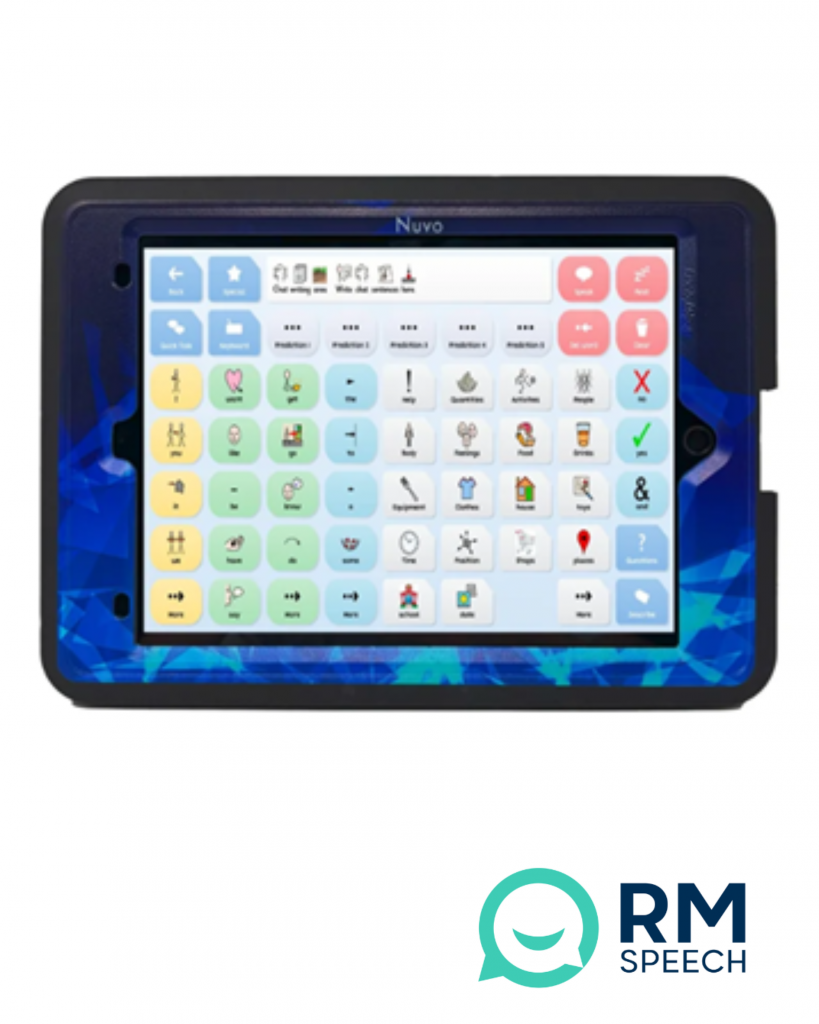
Early exposure to speech devices can make a big difference in helping users gain language skills. Users don’t have to qualify based on certain diagnoses or skills, and options range from low- to high-tech.
Because communication can be difficult for children with ASD and other neurodevelopmental conditions, AAC devices can be life-changing. Here are a few ways these speech devices help:
1. AAC Devices Give Your Child a Reliable Way to Communicate.
AAC devices give users — whether that’s children with ASD and other neurodevelopmental conditions or anyone who struggles with communication — a reliable way to express themselves.
This includes:
- Expressing needs (“I’m hungry” or “I’m tired”)
- Communicating emotions and feelings (“I’m upset” or “I’m sad”)
- Sharing ideas or preferences.
AAC devices can help reduce guesswork for you and your child and make meaningful communication more accessible for everyone.
2. AAC Devices Support Speech
One of the most common concerns parents or caregivers have about using an AAC device with their children is: Will using an AAC device stop my child from talking?
Simply put, the answer is no. Studies show that consistently using a speech device can help children build verbal speech by making connections between words, objects and ideas.
Research published in the Journal of Speech, Language and Hearing Research says AAC devices help support speech development by:
- By reducing the pressure to speak, AAC devices allow children with limited speech or vocabulary a way to communicate with those around them.
- Based on research led by MaryAnn Romski and Rose Sevick, AAC devices provide consistent models of language, helping to strengthen kids’ understanding of how words are used.
“AAC devices are not a replacement for verbal speech,” Morgan said. “But by providing a constant model, it promotes more verbal language development. AAC devices are meant to be a support system, an outlet or tool that creates a different way for people to communicate.”
3. AAC Devices Reduce Frustration and Challenging Behavior.
When children can’t communicate, their frustration often shows up in behavior.
“Behavior is communication,” Nall said. “If your child is having a behavioral response, they’re trying to tell you something. They may be trying to tell you that something hurts, that they’re hungry or don’t like the way their shirt feels.
“If we can give them a functional way to communicate those needs,” Nall continued, “it increases their independence and helps mitigate without having to have a meltdown.”
AAC devices can help to bridge that gap and lead to more positive interactions.
Learn more about how to ease frustration and anxiety for kids with autism, especially while traveling.
4. AAC Devices Improve Social Interaction.
AAC usage can help increase social interaction for kids with ASD or those who struggle with communication.
Research published in the Journal of Autism and Developmental Disorders show that AAC devices can help children with ASD:
- Initiate conversations
- Respond to others
- Engage more meaningfully with peers
5. AAC Devices Support How Many Kids with ASD Learn Language
Some children with ASD are Gestalt Language Processors (GLP), meaning they learn language in chunks or phrases rather than word by word. They may repeat phrases from movies or TV shows, song lyrics or phrases parents or caregivers often say during daily routines, such as “All done” or “Let’s go outside.”
AAC devices can support GLP learners by:
- Providing full phrases and scripts
- Helping children break language into smaller parts over time to use words in new combinations
- Matching how children naturally learn language
Dedicated Speech-Generating Devices v. Communication Apps
Any child who has difficulty being understood may benefit from an AAC device, but the type depends on each child’s individual needs and abilities. For many children, communication apps installed on a tablet may be the perfect solution, but others may need additional accessibility options and support.
The best communication device is the one that your child will use, but there are benefits to purchasing a dedicated speech-generating device. These include:
- Dedicated speech-generating devices are FDA regulated and used specifically for communication. Because they are considered medically necessary, they may be covered by insurance.
- AAC devices are durable and can withstand heavy use. A variety of cases are available, depending on the user’s needs, and the speech-generating devices feature tempered glass screen protectors.
- As dedicated speech-generating devices, AACs are designed specifically to help users communicate. Because this is the focus, they limit access to the app store and the internet to keep the focus on communication.
- The manufacturer and supplier offer ongoing training and support for the lifetime of the device.
“Tablets and communication apps or software are not bad solutions,” Morgan said. “The best solution is what works for your kid, but a benefit of insurance-funded devices is that you’ve got a support system in place who you can call if you need help.”
How Do You Get an AAC Device?
As a parent, you may be convinced that your child would benefit from a speech-generating device — but you may not know where to start. Not knowing or understanding the process doesn’t have to be a barrier to more effective communication.
Here’s what the process looks like:
- Start with a referral or insurance check. Connect with NSM’s team to verify your benefits, provide your clinical Team’s contact information and discuss the process.
- Schedule a Physician Face-to-Face. Your insurance will require your physician to chart in the medical record that an AAC device is required to support or augment your child’s communication and that they are recommending your child is seen by a Speech Language Pathologist (SLP) for evaluation.
- Get a Referral from a Speech Language Pathologist (SLP). To be covered by your insurance plan, AAC devices must be shown to be medically necessary, which requires a Letter of Medical Necessity and evaluation from an SLP. If your child works with an SLP in your school system, that person can complete the evaluation and submit the letter. If your child is not currently receiving speech therapy, ask your physician to refer you to a local SLP or clinic.
- Device and Software Trials With SLP. Under the guidance of your SLP, you and your child will try out a few different AAC devices or systems to see what works best. The SLP may also need to consult with occupational or physical therapists for recommendations if specific wheelchair mounts, switches or additional accessories are needed for greater accessibility.
- Submit SLP Evaluation and Plan of Care. After determining which speech-generating device is best suited for your child, the SLP completes and submits a formal AAC evaluation. This AAC assessment documents your child’s communication needs and justifies medical necessity to the insurance carrier.
- Insurance approval and delivery. Insurance approval takes 1-4 weeks, and once approved, AAC devices generally ship in 1-4 weeks.
Taking the Next Step
If you think your child could benefit from an AAC device, reach out to NSM to get the conversation started. Click here to find a location near you to connect with NSM’s dedicated team to explore options, discuss insurance coverage and find the best fit for your family’s needs.
FAQ: AAC Devices for Autism
Do AAC devices stop children from talking?
No. Research shows AAC devices often support and improve speech development.
At what age can a child start using AAC?
Children can begin using AAC at any age, even toddlers.
Are AAC devices covered by insurance?
Yes, many speech-generating devices are covered when they are shown to be medically necessary.
What is the best AAC device for ASD?
The best device depends on your child’s needs, abilities and preferences. Every child is different, and it is important to work with your child’s therapists to find a device that fits your child’s current needs. The best device is one that your child will use.
More Stories
Related Articles
Augmentative & Alternative Communication Devices for Autism: A Guide for Parents
How Speech-Generating Devices Help Kids Communicate Experts: Keri Morgan, MS, CCC-SLP, and Chelsea Nall, OTR/L, CSRS, ATP At-a-Glance Summary: Augmentative and Alternative Communication (AAC) devices for…

Enteral Feeding at Home: Expert Guide for Patients & Caregivers
Learn how to manage enteral feeding at home with expert tips on feeding tubes, pumps, troubleshooting and daily care routines. Quick Takeaways The good news: most challenges…