

March 2026 | In This Issue:
- Making the Most of Your Mobility Equipment Appointment
- REAL STORIES: How Pediatric Mobility Solutions Changed Zippy's Life
- Product Spotlight: Staley FreeArm
- Achieving Greater Independence at Home Through Home Access Solutions
- A Fun & Fruitful Life: Lolo Spencer Changes the Narrative About the Lives of People with Disabilities
Making the Most of Your Mobility Equipment Appointment
A Guide to Speaking Up and Getting What You need
Preparing for a Complex Rehabilitation Technology (CRT) appointment—whether it’s your first evaluation or a follow-up—can feel overwhelming. There’s often a lot to think about, from understanding your equipment options to navigating insurance requirements and timelines. But with a little preparation and a clear understanding of your needs, you can take an active and confident role in shaping the right mobility solution for your lifestyle.
Your voice is one of the most important parts of the process. By thinking ahead about your goals, challenges, and daily routines, you’ll be better equipped to guide the conversation and ensure your care team fully understands what matters most to you. Whether you're looking to improve comfort, increase independence, or better support your day-to-day activities, being prepared can help make your appointment more productive and less stressful.
Here are some practical tips to help you communicate effectively, ask the right questions, and advocate for yourself during your appointment. (Read More)

Be Ready to Communicate Your Mobility Goals
As the Complex Rehabilitation Technology (CRT) user, you need to be able to tell the story of what you want to accomplish — and that includes your personal and professional goals as well as how you like to spend your free time. If there’s something you want to be able to do or a particular mobility need you have, be prepared to talk to your ATP about that desire and why it’s important to you. The more clearly you or your caregiver can communicate that need or goal, the better.
Be Able to Explain What’s Not Working
If something isn’t working quite right with your mobility equipment—from a faulty joystick or failing battery to a hard-to-maneuver manual chair—be prepared to communicate the problem in detail to your ATP. If you cannot communicate it yourself or don’t feel comfortable sharing about your personal circumstances, ask a caregiver or friend to accompany you and help you communicate your needs and desires.
Review Your Insurance Coverage and Advocate for Yourself
As the insurance policy holder, you need to know and understand what your insurance provider covers and what it doesn’t as well as any documentation requirements they may have. By understanding what documentation is required to prove medical necessity or move the order forward, you can proactively advocate for yourself with your physician and therapy teams to help us obtain the necessary documents and forms. Once documentation has been submitted to your insurance provider, you can contact your provider to expedite your authorization. And—whether it’s your first evaluation or your 100th—be sure to bring your insurance card and other important information to the appointment.
Do Your Research
Prior to your appointment or evaluation, take a look at the manufacturer’s website to learn more about what’s currently available and might fit your needs. While you may ultimately end up with a different mobility solution, having a solution in mind can help the ATP better understand what you want or need. Come to the appointment prepared to try out a new seating system or piece of equipment or to be assessed while operating the equipment or driving the chair.
Ask Questions
Make a list of questions you want answered or information you need to understand during the appointment and go over it with your ATP. Ask to be educated on how your equipment works and what you can do to help maintain it and for documentation that supports these efforts.
Seek to Understand the Process
Whether you’re ordering new equipment or getting a repair, understanding the nuances of the process can be helpful. Ask your ATP to explain the timeline or provide documentation that helps you better understand next steps. While you don’t need to be an expert on every detail, being familiar with the process can be helpful.
Have more questions about NSM and mobility solutions? Check out these FAQs.
REAL STORIES: How Pediatric Mobility Solutions Changed Zippy's Life
Custom mobility solutions make a measurable difference in the lives of children and families living with disabilities and complex medical needs. From something as simple as being able to watch a favorite TV show to hugging a loved one, Complex Rehabilitation Technology (CRT) equipment makes it possible for users to enjoy their greatest levels of mobility and independence.
Custom mobility solutions change lives by:
- Increasing independence and social interaction,
- Supporting physical, emotional and cognitive development,
- Improving caregiver confidence and quality of life, and
- Enabling safe participation and connection within the home and community.
 Real-Life Examples of CRT Equipment in Action
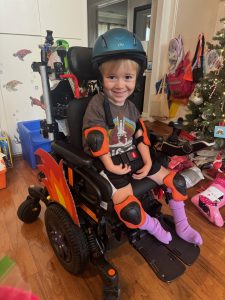
At 4 years old, Cyrus — known to his family and friends as Zippy — was born with arthrogyposis multiplex congenita (AMC), a condition characterized by stiff joints, contractures and tight muscles that severely limit mobility. Zippy started therapy eight hours after birth, his mom, Cindy Mood, recalls, and he was just shy of his first birthday when the Moods began considering a wheelchair to increase Zippy’s mobility.
“We had a stroller, but it wasn’t allowing Zippy as much visibility,” Mood said. “He was a little less than 1 year old when we got his first manual wheelchair through National Seating & Mobility (NSM). That was a real game-changer, and he was so proud to be sitting up in his chair, and it gave him more freedom.”
As Zippy grew, his parents and care team wanted to provide as many opportunities as possible for him to enjoy independent mobility, just like his peers. When he was about 2 years old, they began considering a power chair. At first, the Moods and the care team looked into head controls because of Zippy’s limited limb mobility, but the solution ultimately turned out to be a joystick paired with arm supports.
In addition to his power chair, which includes seat elevation, Zippy has also benefited from other equipment from NSM: a gait trainer and stander, both of which have helped with muscle development; a shower chair and an Obi Robot that allows Zippy to feed himself.
These tools allow Zippy to zip around with the exuberance of his 4-year-old peers and enjoy the physical, emotional and cognitive benefits of independent mobility.
“Probably the biggest thing is that Zippy and his sister are able to play together,” Cindy says. “Having this equipment and the NSM team, including our Assistive Technology Professional (ATP) Ryan Martin, gives Zippy greater confidence, and he benefits physically, mentally, emotionally and socially from being able to interact on his own. As caregivers, it takes a little of the weight off our shoulders.”
Learn More about NSM’s Mobility Solutions
Zippy’s custom pediatric wheelchair and assistive technology gave him independent mobility, improved muscle development, and the confidence to interact with peers—demonstrating how early access to CRT equipment can transform childhood development. Learn more about what NSM has to offer.
March Product Spotlight: The Staley FreeArm
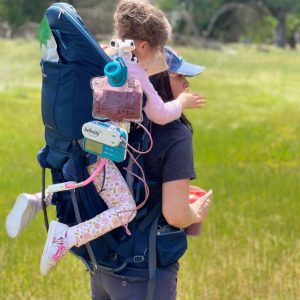
When it comes to simplifying complex care routines, few products deliver the kind of practical innovation seen in the Staley FreeArm. Designed with real-life caregiving challenges in mind, this versatile feeding support device acts as an extra set of hands—bringing greater independence, flexibility, and ease to nutritional support for people wherever they go.
 A Purpose-Driven Innovation
The FreeArm was created by parents who experienced firsthand the demands of tube feeding their child. What started as a simple solution to manage feeding equipment has grown into a globally used support tool for both home and clinical settings.
What It Does
At its core, the FreeArm is a flexible, clamp-on support arm that securely holds feeding supplies such as:
- Gravity syringes
- Feeding bags
- Pump tubing and infusion lines
It attaches easily to surfaces like wheelchairs, beds, strollers, and tables—positioning equipment exactly where it’s needed for safe, effective use.
Key Features & Benefits
Hands-Free Convenience
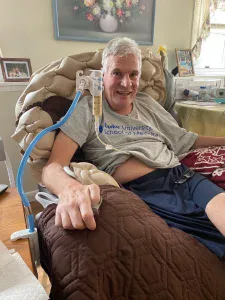
The FreeArm stabilizes feeding and infusion equipment, freeing caregivers and users to focus on comfort, positioning, or other tasks.
Flexible & Adjustable Design
Its bendable arm allows for precise positioning, helping maintain optimal flow rates and reducing strain during feeding.
Portable & Travel-Friendly
Unlike traditional IV poles, the FreeArm is lightweight and compact—making it ideal for use at home, in clinics, or on the go.
Universal Compatibility
The clamp system works with a wide range of surfaces, including wheelchairs—supporting mobility without sacrificing functionality.
Why It Stands Out
The FreeArm isn’t just a convenience tool—it’s a quality-of-life solution. By eliminating the need for bulky equipment and enabling more natural movement, it empowers users to maintain routines with greater independence and dignity.
Ideal For
- Individuals using feeding tubes or infusion therapy
- Caregivers managing daily medical routines
- Clinicians seeking portable alternatives to IV poles
- Active users who need solutions that move with them
Contact your local NSM branch representative to learn more!
Achieving Greater Independence at Home Through Home Access Solutions
At-A-Glance: Custom Home Access for Independence
- Jeremy Siegers, a power wheelchair user, faced challenges with daily transfers at home.
- NSM designed a custom ceiling lift and track system for safe, independent movement.
- Features include full-room mobility, smooth bathroom transitions and reduced caregiver strain.
- Result: increased independence and easier daily routines for both Jeremy and his caregivers.
How a Ceiling Lift System Transformed Daily Life for Chicago-Area Entrepreneur Jeremy Siegers
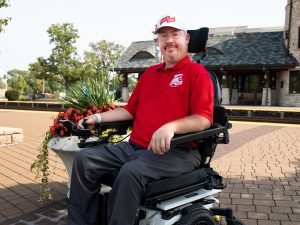 For Jeremy Siegers, creativity is part of what makes him tick.
As the owner of Sharp Mill Graphics, a multi-surface branding management company based in the Chicagoland area, he’s used to finding creative solutions for unique challenges. But when it came to navigating his home as a power wheelchair user, Siegers realized he needed a tailored home access solution.
That’s where National Seating & Mobility’s (NSM) Home Access team came in. Learn more about how home accessibility solutions can practically help complex rehabilitation technology (CRT) users like Siegers.
The Challenge: Daily Transfers with a Hoyer Lift
Like many wheelchair users, Siegers relied on a manual Hoyer lift to transfer between his mobility scooter, bed and other areas of his home. However, as his limb-girdle muscular dystrophy progressed and Siegers transitioned to a power wheelchair, these transfers became increasingly difficult — not just for him, but also for his caregivers.
“I’m 6 foot, 2 inches tall and 200 pounds,” he said. “Having my mom, who is smaller than me, trying to maneuver me around — it got to be too much work for her or whoever was helping me transfer me.”
Siegers knew he needed a home accessibility solution that would provide independence while also reducing the strain on his parents and other caregivers.
Partnering With NSM for a Custom Track System
The ceiling lift and track system project began with a simple question.
“After I moved to my power chair, I was trying to finagle transfers with the Hoyer lift,” Siegers recalled. “I asked my ATP what other people used for transfers and just knew that there had to be other solutions out there.”
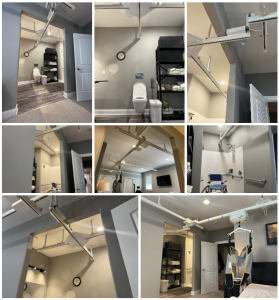 Siegers’ ATP connected Siegers with NSM’s Home Access team, who came to Siegers’ home and walked through his daily routine with him. Together, he and the NSM Home Access team worked to create a custom solution that fits Siegers’ unique needs.
The result was a custom ceiling track system, a motorized track and lift installed in Siegers’ home that helps him safely transfer between a wheelchair, bed, shower or toilet with minimal caregiver assistance.
Siegers describes the system as “similar to an engine hoist in an auto body shop.” Key features include:
- X-Y axis movement: The track system allows Siegers to move forward, backward, left or right, unrestricted by a single track
- Custom bathroom carousel: Siegers can rotate completely to access the shower chair and other areas of the bathroom
- Seamless transitions: A gate system allows Siegers’ smooth movement between rooms
The NSM team carefully planned the installation, first evaluating Siegers’ home to ensure it could structurally support the weight of the track system. Then, the team laid out the track, mounted it to ceiling rafters and fine-tuned transitions room-to-room to ensure it worked correctly and fit Siegers’ needs.
The Impact: Independence and Reduced Caregiver Strain
While Siegers still requires minor assistance to attach to the lift, the system significantly reduces caregiver burden. Now, all his caregivers need to do is help him hook onto the lift — a small task compared to manually lifting him multiple times a day.
“My parents are getting older, and I have a caretaker as well, but the burden [of manually lifting me] got to be too much,” he said. “This system is part of our daily routine and a huge help. I use it every single day, and I don’t know what I’d do without it.
“It’s definitely an investment,” he continued, “but it’s an investment that’s worth it for all parties involved.”
Discover Custom Home Solutions
If you or a loved one is seeking greater independence at home, NSM offers custom home accessibility solutions designed around your life. From ceiling lifts to home modifications, the NSM Home Access team creates solutions that fit your unique mobility needs.
Click here to learn more about Home Access Solutions!
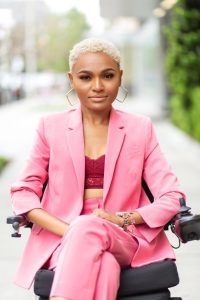 Lolo Spencer