
Power Wheelchair Joystick Alternatives & Smart Safety Technology
How eye gaze, sip-and-puff, head arrays and drive assist systems help people with limited hand movement stay mobile, safe and independent.
At a Glance
- Smart technologies are reshaping independence for wheelchair users by seamlessly integrating computer-assisted control into everything from power chair driving to home environments and everyday activities.
- Alternative drive controls include devices such as head arrays, sip-and-puff control and micro joysticks, as well as eye gaze technology. Alternative drive controls like these can replace a traditional joystick for people with limited hand function or dexterity.
- Smart Sensor Technology uses cameras, radar and ultrasonic sensors, similar to current motor vehicles, to detect obstacles and drop-offs to prevent collisions or tip-overs.
- People living with a wide variety of conditions and diagnoses may benefit from these technologies, including those with vision impairment, poor motor control, spasticity or tone, those who are easily fatigued or who have delayed reaction times or are easily distracted.
- An evaluation with your healthcare team and an Assistive Technology Professional (ATP) can help determine which technology solutions might best match your needs and goals.
Power wheelchairs offer freedom, independence and mobility for individuals who are unable to walk or propel a manual wheelchair. But what happens when you no longer have the dexterity to use the joystick, are unable to see what’s below or behind you or deal with unpredictable spasms that make safely driving a power wheelchair feel impossible?
Power chair driving assist devices help keep power wheelchair users moving through life on their own terms. Alternative drive control options and smart technology solutions can make operating a power wheelchair safer and easier and open the door to greater independence for many power chair users.
What Are Joystick Alternatives and Smart Technologies for Power Wheelchairs?
Alternative drive controls and smart technologies are designed to bridge the gap between a person’s functional limitations and the life they choose to live. Joystick alternatives can include head arrays, sip-and-puff controls and micro joysticks as well as alternative drive controls with tablet interfaces. Driver Assist accessories use sensors to detect obstacles, curbs and drop-offs while also intervening, when needed, on behalf of the driver to prevent collisions and tip-overs.
These include:
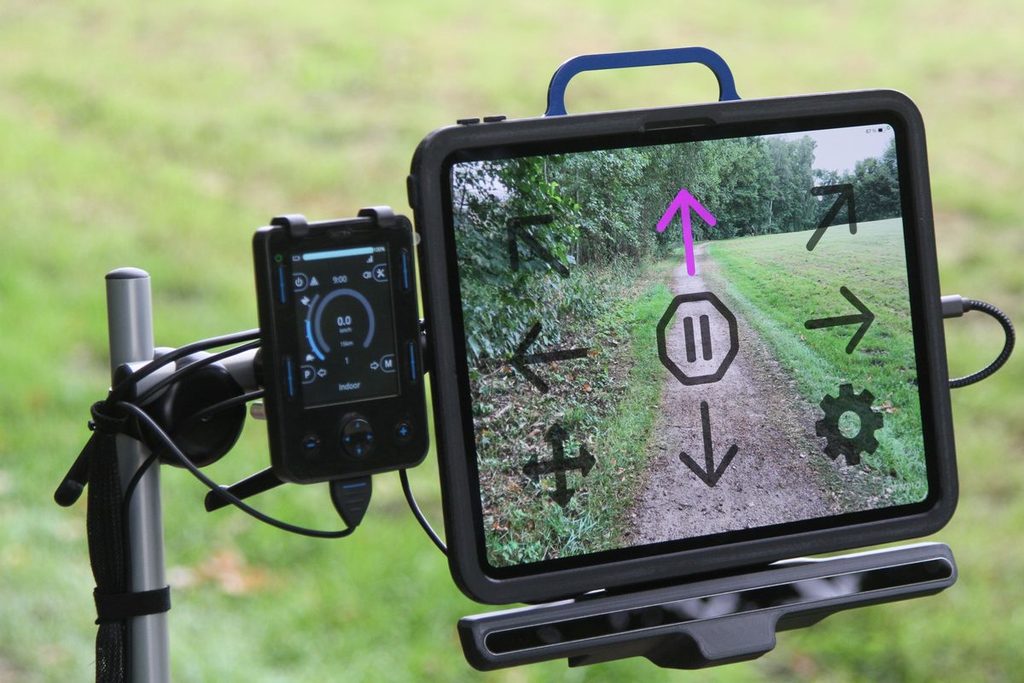
- Alternative Drive Controls, like Tolt’s Ability Drive or HomeBrace, replace the traditional joystick control with a tablet computer. This gives drivers with limited hand dexterity or head function the ability to drive their power chair by looking at screen icons. An eye-tracking camera detects where the driver is looking on the screen, and the Ability Drive interface translates that into chair movement. The same screen also controls the chair’s power seating functions, including tilt, recline and leg elevation.
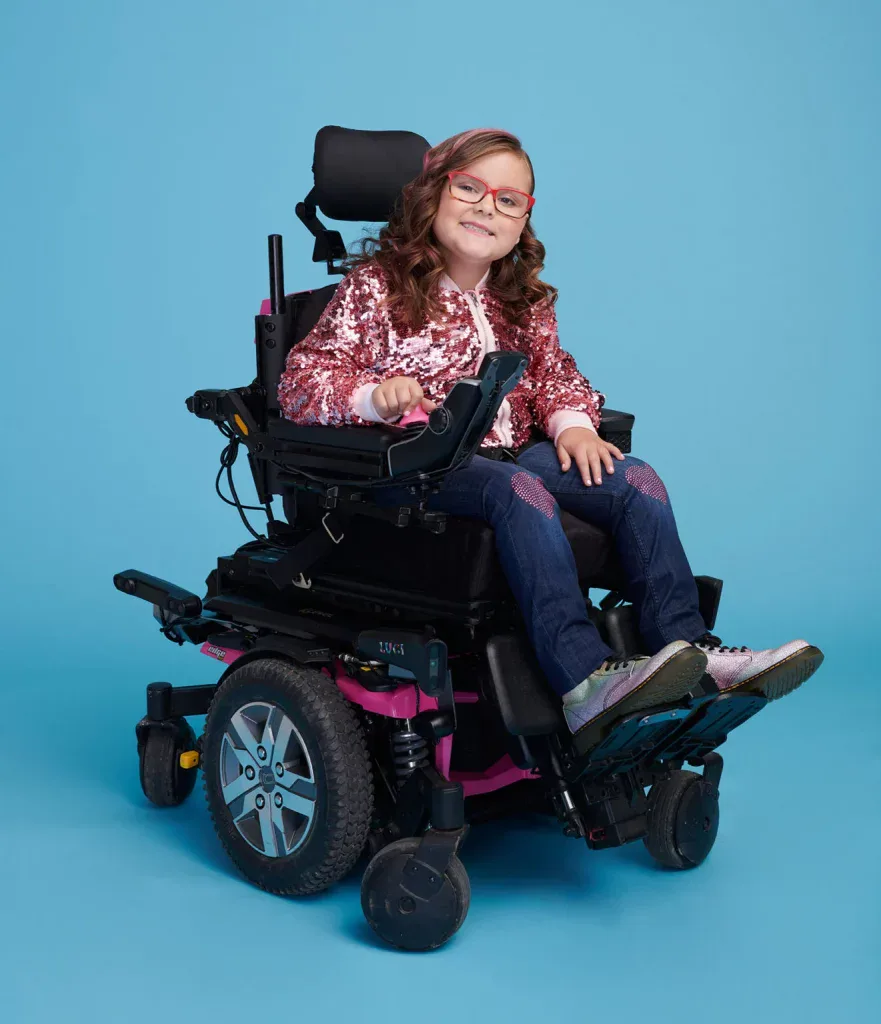
- Advanced Driver Assist, such as LUCI, helps the power wheelchair driver avoid collisions, tip-overs and other dangers. LUCI works with the users’ preferred drive control method, whether a traditional joystick or an alternative drive control, to optimize independence.
Who Can Benefit from Eye Gaze as an Access Method for Driving Their Power Chair?
Alternative drive controls like head arrays, sip-and-puff and micro joysticks may work very well for many power chair drivers. However, for some individuals who may change position in their chairs as they fatigue, using eye gaze can be a more reliable option because it isn’t as sensitive to positional changes. In addition, having a monitor that reads their eyes instead of relying on touch may reduce repair needs and downtime for individuals with spasticity. Sip-and-puff drive controls have been a go-to for individuals with little to no head movement, but these can be tricky to learn and require a cleaning protocol. Eye gaze systems can be more intuitive for some individuals to learn.
Tolt’s Ability Drive® is a high-tech drive control that pairs medical-grade eye-tracking cameras with patented software to turn a driver’s gaze into wheelchair movement, restoring independent mobility and seating control without a joystick.
This can be incredibly helpful for power wheelchair users who’ve suffered brain or spinal cord injuries, had an amputation or have been diagnosed with neurological disorders or progressive conditions such as:
- ALS: Eye tracking is a very reliable long-term access method as this diagnosis progresses, according to studies published in The Open Biomedical Engineering Journal and Muscle & Nerve
- Spinal Cord Injury (C3 and above): Limited hand function, often intact head/eye control
- Cerebral Palsy
- Multiple Sclerosis, Parkinson’s or stroke: When tremor or coordination makes joystick control unpredictable
An added bonus: Some augmentative and alternative communication (AAC) devices, including RM Speech, are compatible with Tolt’s Ability Drive, meaning users can use the tablet to both talk and drive — without having to switch between technologies or buy extra equipment. The tablet also allows users to schedule weight shifts without the help of caregiver, providing independence and helping drivers who can’t reach a joystick relieve pressure and prevent pressure injuries. Learn more.
How Do You Find Out if Tolt Ability Drive Is a Good Fit?
Like all Complex Rehabilitation Technology (CRT) equipment, the process begins with a multi-step clinical and technical assessment involving members of your medical care team as well as one of NSM’s certified ATPs. Your care team may include your physician, physical and occupational therapists as well as other healthcare providers.
The evaluation will help your care team determine your readiness, physical safety and cognitive skills to operate a power chair using eye gaze.
The evaluation may include:
- Your ATP configuring hardware and speed as well as calibrating the eye-gaze tracking device.
- Your ATP and care team confirming that you understand and can safely use the device’s directional commands.
- Screening out users whose uncontrolled eye movements would disrupt eye gaze control, meaning they are not a good candidate to use the technology.
- In Ability Drive, verifying the chair stops moving when the driver looks at the stop icon, looks away from the screen or closes their eyes.
After the evaluation, your ATP will write a detailed quote for the equipment, and the NSM team will submit all required paperwork to Medicare, Medicaid or your private insurance carrier for funding. Your care team will often need to provide detailed medical records as well as a Letter of Medical Necessity. The NSM team will guide you through the process with your insurance carrier.
Safety Matters, Too
Conditions that affect hand function also often affect reaction time or vision, which can create additional safety concerns. If you are concerned about walking in a crowd without hitting someone, hitting walls and cabinets in your home, backing up over a dog or small children or driving off the edge of a ramp or curb, an advanced driver assistance option like LUCI may be beneficial.
LUCI is a hardware and software system that attaches to power wheelchairs. It uses sensor‑fusion technology (radar, cameras and ultrasonics) to build a real-time picture of what’s happening 360 degrees around the base of the chair. When LUCI detects an obstacle or unsafe drop-off in the power chair users driving path, the technology will slow the chair down as a cue to the driver. If the driver is unable to change course or stop on their own, LUCI will intervene to stop the chair.
NSM is the Preferred National Partner for LUCI, so connect with your local branch to learn more about the technology. Learn more about LUCI at luci.com.
Ready to Take the Next Step?
Your clinical care team, which includes your physician, physical therapist, occupational therapist and other specialists, can help determine which bionic and smart tech devices may be beneficial for you or your loved ones. NSM’s experts will work alongside your care team to identify the right device, schedule a trial and navigate insurance. Start the conversation by connecting with an NSM specialist.
Frequently Asked Questions
What is a power wheelchair joystick alternative?
A power wheelchair joystick alternative is a different way to control a power wheelchair when using a traditional hand-operated joystick is difficult or no longer possible. Alternative drive controls can include eye gaze technology, sip-and-puff systems, head arrays and other adaptive input methods that allow users to continue driving their chairs independently.
Who can benefit from eye gaze wheelchair controls?
Eye gaze controls can benefit people who have limited or no hand function but can reliably control their eye movements. Eye gaze wheelchair controls are often recommended for individuals living with ALS, high-level spinal cord injuries, cerebral palsy, multiple sclerosis, Parkinson’s disease or certain stroke-related impairments.
How does eye tracking control a power wheelchair?
Eye tracking technology uses a camera to detect where a user is looking on a screen. Software converts those eye movements into drive commands, allowing the user to move forward, backward, turn and stop without using their hands. Systems like Tolt Ability Drive translate those commands into the same signals normally sent by a wheelchair joystick.
Can you drive a power wheelchair without using your hands?
Yes. Several alternative drive control technologies allow people to operate a power wheelchair without using their hands. Depending on a person’s abilities, options may include eye gaze control, sip-and-puff systems, head arrays or other adaptive controls prescribed through a clinical evaluation.
What conditions qualify for alternative wheelchair controls?
Alternative wheelchair controls may be appropriate for people whose medical condition limits safe joystick use. This can include ALS, spinal cord injuries, cerebral palsy, muscular dystrophy, multiple sclerosis, Parkinson’s disease, stroke and other neurological or progressive conditions. A clinical evaluation determines whether a specific technology is appropriate.
What is the difference between alternative drive controls and wheelchair safety assist technology?
Alternative drive controls replace the traditional joystick with another method of driving, such as eye gaze. Safety assist technologies work alongside a user’s preferred driving method to help reduce collisions, detect obstacles and identify hazards like curbs or drop-offs. Many users can benefit from using both technologies together.
What is LUCI for power wheelchairs?
LUCI is a smart safety system designed for compatible power wheelchairs. It uses cameras, radar and ultrasonic sensors to monitor the area around the chair in real time. The system helps users avoid collisions, detects drop-offs and provides additional protection against certain driving hazards while allowing users to maintain control of their wheelchair.
Does Tolt Ability Drive work with communication devices?
Yes. Some augmentative and alternative communication (AAC) devices are compatible with Tolt Ability Drive. Depending on the user’s equipment, they may be able to communicate and drive their power wheelchair from the same tablet, reducing the need to switch between separate devices.
Can eye gaze controls adjust wheelchair seating, not just driving?
Yes. Ability Drive® allows users to operate power seating functions, including tilt, recline and leg elevation, from the same eye gaze screen they use to drive. This matters because power wheelchair users are typically prescribed regular weight shifts throughout the day to relieve pressure and prevent pressure injuries. Being able to reposition independently means following that schedule without waiting for a caregiver.
How do I know if eye gaze wheelchair controls are right for me?
The first step is a comprehensive evaluation with your healthcare team and a certified Assistive Technology Professional (ATP). They will assess your vision, cognitive abilities, physical function and safety to determine whether eye gaze technology is an appropriate solution and identify the best wheelchair driving system for your needs.
Can power wheelchair smart driving assist technology improve independence?
Yes. Smart technologies can help people continue using their power wheelchairs even when changes in strength, vision loss (LUCI can support power wheelchair navigation with a white cane), cognition, dexterity or coordination make a traditional joystick difficult to use. By matching the control method to the user’s abilities, these technologies can help support independence, mobility and participation in everyday activities.
More Stories
Related Articles
Power Wheelchair Joystick Alternatives & Smart Safety Technology
How eye gaze, sip-and-puff, head arrays and drive assist systems help people with limited hand movement stay mobile, safe and independent. At a Glance Power…
Bionic Assistive Devices: Robotic Arms, Exoskeletons & Smart Wheelchair Technology
A Guide to Today’s Assistive Technologies Reviewed by: Kelsy Brown, OTD, OTR/L Lindsey Sharpe PT, DPT, ATP Taking a sip of water. Standing at the kitchen counter…

Traveling with Catheters: TSA Rules, Packing Tips and Flying with Urology Supplies
With a little planning, traveling with catheters and urology supplies can be easier than you think Reviewed by the NSM Medical Supplies Team You can safely…