
Bionic Assistive Devices: Robotic Arms, Exoskeletons & Smart Wheelchair Technology
A Guide to Today’s Assistive Technologies
Reviewed by:
Kelsy Brown, OTD, OTR/L
Lindsey Sharpe PT, DPT, ATP
Taking a sip of water. Standing at the kitchen counter for meal prep. Opening a door. Blowing your nose. All are commonplace activities, things you don’t think about until you can’t do them anymore.
For millions of Americans living with physical disabilities, spinal cord injuries, ALS, muscular dystrophy (MD) and other complex conditions, everyday tasks like these can feel impossibly out of reach.
That’s the gap bionic assistive technology was built to close.
At a Glance
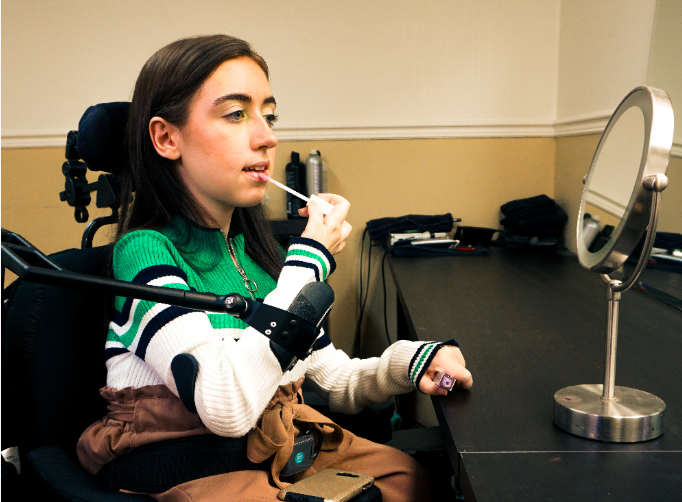
- Bionics uses engineering, neuroscience and AI to mimic or enhance natural movements of the body to restore or compensate for function lost due to injury or disease.
- It can benefit people living with various neurological diagnoses such as spinal cord injury, ALS, MD, Cerebral Palsy (CP), Multiple Sclerosis (MS), Parkinson’s, stroke, spinal muscular atrophy (SMA) or traumatic brain injury (TBI).
- Article Focus: robotic arm assistive device, upper extremity powered brace, lower extremity exoskeleton brace and powerchair drive assist systems.
- Device coverage varies by insurance type and device.
- NSM’s certified Assistive Technology Professionals (ATPs) work alongside your clinical team to match you with the right technologies to fit your needs.
What Are Bionic Devices?
Bionics and Rehabilitation Engineering merge biology, mechanical engineering, neuroscience and artificial intelligence to create assistive devices that restore, assist or enhance physical function.
Bionic assistive devices can include exoskeletons, robotic arms, powered arm support and smart power chair systems — such as systems that use eye gaze technology so users can drive with their eyes or sensing technology that helps users avoid collisions, tip-overs and drop-offs.
Who Benefits from Bionic Devices?
Bionic assistive devices help people living with disabilities, progressive diagnoses, neurological conditions and more to maintain independence and mobility, moving through life on their own terms.
Like Complex Rehabilitation Technology (CRT) equipment, bionic devices are not one-size-fits-all. Different types of devices are designed to meet specific needs and diagnoses, levels of function and mobility goals.
Bionic assistive devices can benefit people with a wide variety of conditions and diagnoses, including but not limited to:
- Spinal cord injury
- Muscular Dystrophy/Duchenne’s
- SMA
- ALS
- Cerebral Palsy
- Multiple Sclerosis
- Parkinson’s
- Stroke
- Traumatic brain injury
As with CRT equipment, determining whether a bionic assistive device is right for you starts with your clinical team — your physician, occupational therapist, physical therapist and other specialists who understand your functional needs, diagnoses and goals.
NSM’s certified ATPs will work alongside your care team to evaluate your needs, match you with the right technology, arrange a trial and help you navigate the insurance process.
What Are Some of the Main Types of Bionic Assistive Devices?
While a wide range of bionic assistive devices are available, the main types are usually categorized according to the area of the body support and the type of function they help restore. These include:
- Upper extremity bionics, such as robotic arms and powered arm supports
- Lower extremity bionics, which restore function to the legs and include wearable bionic devices like powered exoskeletons
- Power Wheelchair Driving Assist devices, which allow people without adequate hand or arm function to safely operate power wheelchairs independently or help power wheelchair users avoid collisions, including contact with dangerous obstacles and avoiding tip-over accidents by preventing the chair from driving over unsafe drop-offs.
Upper Extremity Devices: Robotic Arms and Powered Arm Supports
Robotic arms and powered arm supports are devices that mount onto power wheelchairs and assist with arm and hand movement such as gripping a utensil, picking up a drink, opening a door and putting on glasses.
While robotic arms and powered arm supports are both designed to restore mobility and independence to people with limited arm and hand movement or those who have little or no arm or shoulder strength, these assistive devices work a little differently.
Robotic Arms
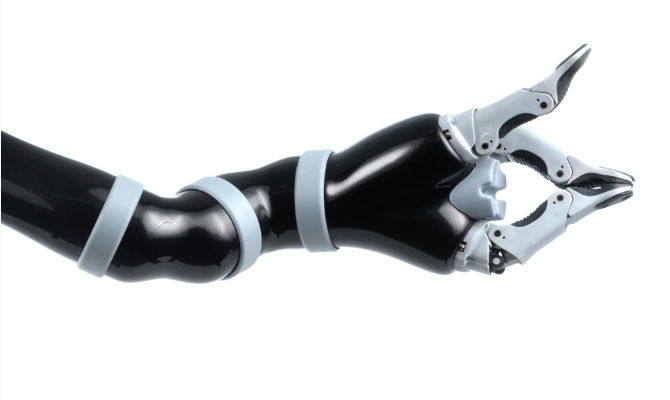
Robotic arms, like the Jaco Assistive Robotic Arm, can be mounted directly to the user’s power chair and mimic the natural movements of the shoulder, elbow, wrist and hand, assisting people with little to no arm or shoulder strength to perform independent activities like taking a sip of water, pushing an elevator button, scratching your nose, opening a refrigerator, or picking something up off the floor.

These assistive devices can be helpful for people with a variety of diagnoses and conditions, including:
- Multiple Sclerosis
- ALS
- Spinal Muscular Atrophy (SMA)
- Cerebral Palsy
- Spinal Cord Injuries
- Stroke
Powered Arm Supports
Powered arm supports are designed for people who have some arm and hand function but may tire quickly or lack the shoulder strength to sustain activity. These assistive devices support the weight of the individual’s arm, making it weightless and allowing users to do more with their existing strength. For example, individuals with certain forms of Muscular Dystrophy may have good hand function, but their arms are unable to lift their hands adequately for activities. The Partners In Medicine 0540 Powered Arm Support is able to unweight the individual’s arms so they can reach, grasp and then bring their arm back. This simple restoration of upper extremity function makes a huge improvement to quality of life and independence for self-care.
Are powered arm supports or robotic arm assistive devices covered by insurance?
The short answer: it depends on your insurance type and is case-by-case for the individual. Many Medicaid plans and commercial health plans have covered these devices with the right medical documentation to support need and increased independence for activities of daily living like eating and drinking.
Lower Extremity Devices: Powered Exoskeletons
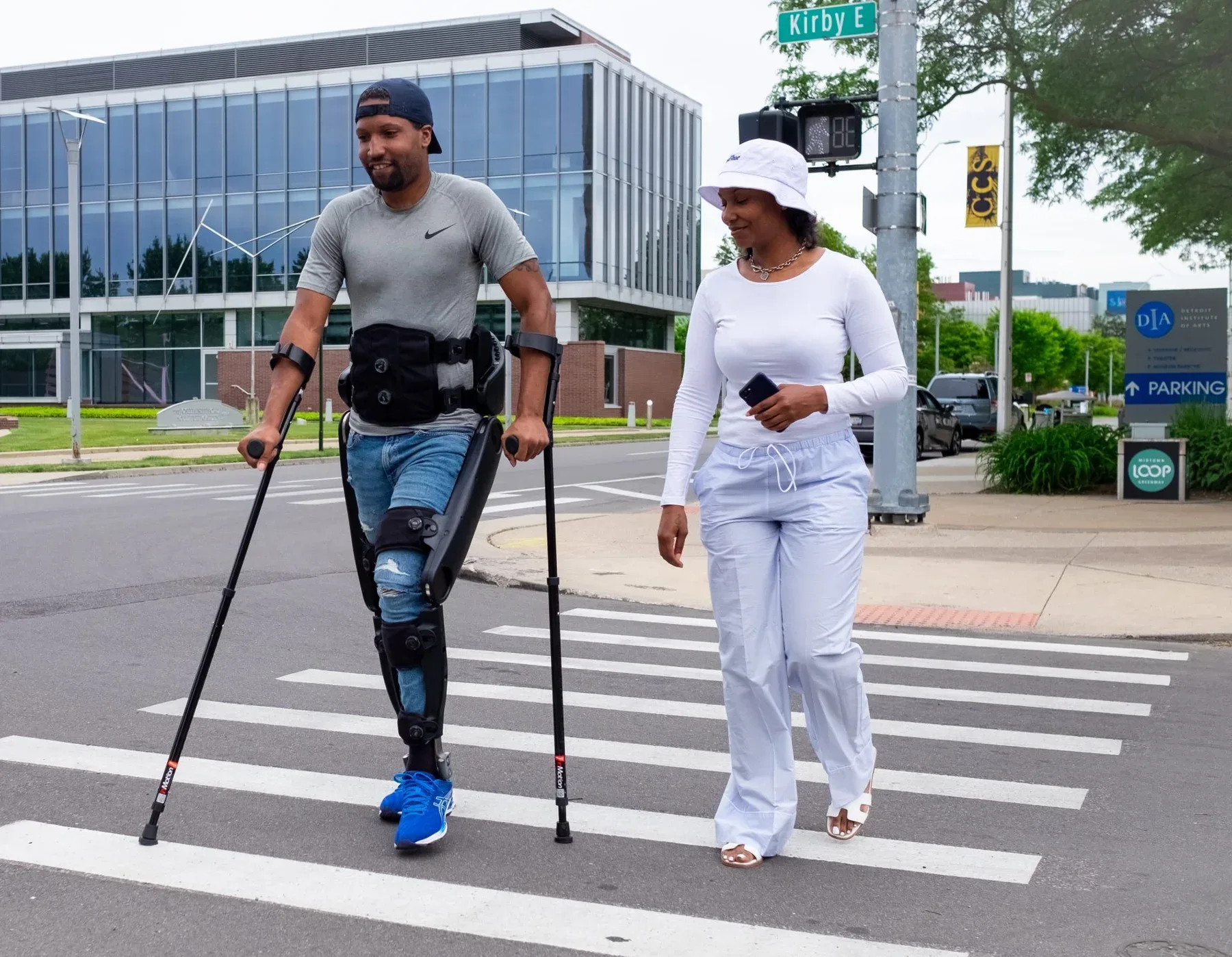
Lower extremity exoskeleton devices are custom-fit braces that contain microprocessors, sensors and motors that help to move the hips and knees so people with spinal cord injuries can stand, walk and handle daily tasks. Because these devices are classified as braces, they don’t interfere with getting a wheelchair as a primary mobility device. These bionic assistive technologies, such as Ekso Bionics’ Indego and Wandercraft’s Eve, are utilized by people with spinal cord injuries allowing them to walk and stand while cooking, cleaning and enjoying time in the community.
How do lower extremity exoskeletons work?
Powered exoskeletons use sensors, motors and other technologies to detect movement intention, and deliver power to hip and knee joints and coordinate natural gait patterns. Other devices like the Wandercraft Eve uses a joystick to walk forward or side-step.
Are powered exoskeletons covered by insurance?
The short answer: it depends on your insurance type. Powered exoskeletons are currently covered by traditional Medicare and Workers’ Compensation for individuals who meet specific medical criteria. Most private insurance plans and states have yet to adopt Medicare’s coverage of exoskeletons as a covered benefit.
Want to learn more?
NSM partners with Ekso Bionics and Wandercraft to provide exoskeletons in more than 20 states. Start the conversation with an NSM specialist so we can determine your next steps or connect you with a provider in your area.
Power Chair Driving Assist Devices
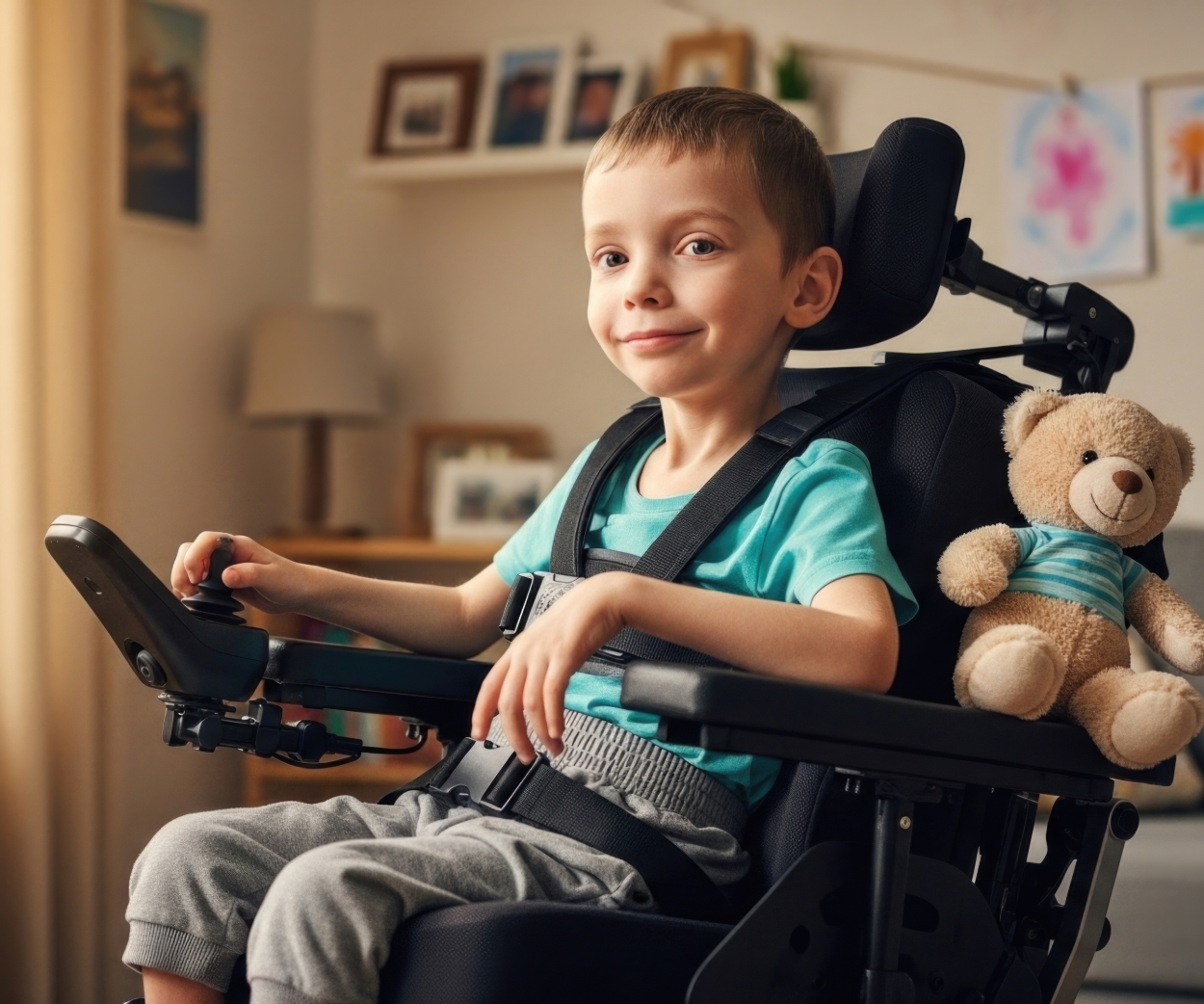
Simply put, power chair driving assist devices make it easier and safer for power wheelchair users to navigate their daily lives.
These assistive technologies help by:
- Enhancing driving safety and helping users avoid injury or accidents.
- Providing alternate ways to control or navigate a power wheelchair, which is particularly helpful for users who cannot use a traditional joystick.
LUCI
LUCI is a collision-avoidance, smart-sensing safety device for power wheelchair riders that uses sensor‑fusion technology — including radar, cameras and ultrasonics — to build a real-time picture of what’s happening 360 degrees around the base of the chair. By continuously monitoring its surroundings and intervening to slow or stop the chair when needed, the technology helps prevent collisions with obstacles and people as well as curb and ramp drop-off accidents and tip-overs, giving users, families and caregivers greater peace of mind in any environment.
For power wheelchair users who have difficulty driving safely, efficiently, or independently due to limited motor control, reduced reaction time or progressive conditions that affect judgment, vision and coordination, LUCI works quietly in the background, intervening only when needed, adding a layer of protection that makes independent mobility safer and more sustainable. For a lot of power wheelchair drivers whose clinical team was hesitant in the past, LUCI is often what finally makes independent mobility possible.
LUCI may be a good fit for individuals living with any neurological diagnosis that limits their ability to drive a power wheelchair safely, confidently, efficiently, or to their full potential in all desired environments. Examples include ALS, Cerebral Palsy, MS, Parkinson’s, stroke, TBI and Muscular Dystrophy.
Tolt Ability Drive and Home Brace
Tolt Ability Drive or HomeBrace allows powerchair drivers to control and navigate their chairs using their eyes. The bionic assistive device utilizes eye-tracking technology providing independence and mobility to users with little to no hand or neck function. Users can also access their power seat functions to tilt, recline, raise their seat height and more throughout the day.
These systems also have an added bonus for powerchair drivers who use Augmentative and Alternative Communication (AAC) devices: the assistive technology is compatible with many AAC devices, including RM Speech, meaning users can move seamlessly between talking and driving on one device.
What Are the Benefits of Bionic Assistive Devices?
From robotic arms and exoskeletons to power wheelchair driver assist, clinical research has shown that bionic assistive devices offer a number of benefits to users.
These include:
- Eye-tracking based electric wheelchair control systems can provide safe and effective independent mobility for children with cerebral palsy, according to a 2022 study published in the Intelligent Human Systems Integration proceedings.
- Children with severe physical impairments improved their time on task and accuracy over time using gaze-based assistive technology, according to a 2015 study published in Assistive Technology.
- Early introduction of power mobility, supported standing and stepping devices can improve functioning, participation and future opportunities for children with cerebral palsy, outlined in a 2023 case report published in Disabilities.
- Smart collision-avoidance and drop-off protection systems for power wheelchairs demonstrated up to 99% effectiveness in preventing collisions and tip-overs, according to LUCI’s 2025/2026 Safety Report.
- A 2023 study published in Clinical Rehabilitation suggested bionic assistive devices like exoskeletons could help improve quality of life and reduce depression.
- Improvements in quality of life and bladder management for exoskeleton users, outlined in a 2022 study published in The Journal of Spinal Cord Medicine.
- Bowel and bladder awareness improvements, highlighted in a 2018 study published in the Journal of Rehabilitation Medicine.
- Ability to restore independence and agency while honoring human dignity in ALS patients, according to a 2026 study published in the Journal of Biotechnology and Biomedicine.
In addition to these benefits, bionic assistive devices also promote personal independence by allowing users to manage Activities of Daily Living (ADLs) such as eating, drinking and personal hygiene on their own. Being able to perform personal care activities without assistance has also been shown to have valuable psychological and social benefits (Disability and Rehabilitation: Assistive Technology, 2022).
Frequently Asked Questions about Bionics
What does “bionic” mean in medicine?
In medicine, “bionic” refers to devices that integrate engineering and technology – often including sensors, motors, and AI – with the human body to restore or support a function that has been lost due to injury or disease.
Are bionic devices the same as prosthetics?
Not exactly. Traditional prosthetics passively replace a missing limb. Bionic devices are powered and computer-controlled, actively responding to the user’s inputs or environment to assist movement.
What is a powered exoskeleton?
A powered exoskeleton is a wearable robotic brace worn over the legs (or body) that uses motors, sensors, and microprocessors to support standing and walking for people with paralysis or significant lower extremity weakness.
Can someone with ALS benefit from bionic technology?
Yes. People living with ALS and many other neuromuscular conditions such as Duchenne Muscular Dystrophy and Spinal Muscular Atrophy as well as neurological conditions like Cerebral Palsy, Multiple Sclerosis and stroke, may benefit from robotic arm supports (like the Jaco) and power chair driving assist devices (like LUCI and Tolt Ability Drive) that help maintain independence as muscle function declines or visual deficits create blind spots.
Are exoskeletons covered by insurance?
Lower extremity powered exoskeletons (billed under HCPC code K1007) are a covered benefit through Traditional Medicare for individuals with Spinal Cord Injuries who medically qualify. Many commercial payers have policies of exclusion still and state Medicaid plans have yet to adopt this new code.
Is LUCI’s collision avoidance sensing technology covered by insurance?
Many state Medicaid plans, Commercial Payers and Medicare have paid for these add-on power chair accessories. Coverage is case by base and requires Therapist and Physician medical justification.
Are robotic assistive arms and powered arms supports covered by insurance?
It can depend on your insurance carrier, plan and medical necessity documentation from your clinical care team. Commercial insurance carriers as well as state Medicaid plans have covered robotic assistive arms and powered arm supports for some users. Your NSM team, along with the manufacturer, can work with you to help determine what your health care plan may cover, even if you don’t have Medicare or Workers’ Compensation insurance.
How do I find out if I’m a candidate for a bionic device?
Start by talking with your occupational or physical therapist. NSM’s technology specialists can also help evaluate your needs, coordinate a device trial, and work with your insurer. Contact NSM to get started.
Ready to Take the Next Step?
Your clinical care team, which includes your physician, physical therapist, occupational therapist and other specialists, can help determine which bionic assistive devices may be beneficial for you or your loved ones. NSM’s experts will work alongside your care team to identify the right device, schedule a trial and navigate insurance. Start the conversation by connecting with an NSM specialist.
More Stories
Related Articles
Bionic Assistive Devices: Robotic Arms, Exoskeletons & Smart Wheelchair Technology
A Guide to Today’s Assistive Technologies Reviewed by: Kelsy Brown, OTD, OTR/L Lindsey Sharpe PT, DPT, ATP Taking a sip of water. Standing at the kitchen counter…
Traveling with Catheters: TSA Rules, Packing Tips and Flying with Urology Supplies
With a little planning, traveling with catheters and urology supplies can be easier than you think Reviewed by the NSM Medical Supplies Team You can safely…
Does Insurance Cover Transportation for Wheelchair Repair or Evaluation Appointments?
In most cases, no. Many private health insurance plans, Medicare and Medicaid programs do not routinely cover transportation to Complex Rehabilitation Technology (CRT) evaluations, fittings or repair appointments. At a Glance What Does…