
NASHVILLE MOMENTUM ACADEMY EDUCATION & TECHNOLOGY EXPO
Tuesday, August 26, 2025
Sonesta Hotel Nashville Airport
Nashville, TN
Event Highlights
- Earn up to 6 hours of continuing education (CE) credits for PT, PTA, OT, COTA, ATP
- Network with industry professionals
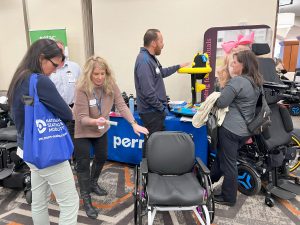
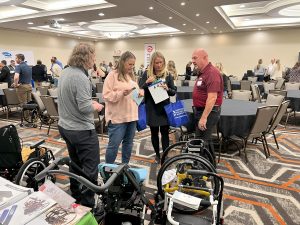
- Exhibit hall with the latest assistive technology
- Breakfast and lunch provided
The rate is: $69 for up to 6 CE credits

SCHEDULE OF EVENTS
7:00am - 7:45am: Registration
7:45am - 8:00am: Kick-off
8:00am - 12:00pm: Education Courses
12:00pm - 1:00pm: Lunch
1:00pm - 5:00pm: Education Courses
The Supplier Exhibit Hall will be open throughout
the day with 2 hours of dedicated exhibit hall time.
Click here for full event schedule.
Continuing Education Courses
Evidence-Driven MWC Configuration: Optimizing Fit and Function for Different Body Types and Propulsion Methods
0.1 CEU / Intermediate
Presented by: Leslie Wade, MOT, OTR/L, ATP
Permobil
This 1-hour course is designed to help providers and clinicians develop best practices for recommending complex rehab technology (CRT) manual wheelchairs for individuals with varying body proportions and propulsion styles. Using the ICF model, the course will guide participants through the decision-making process, balancing evidence with functional outcomes to ensure successful CRT seating and wheeled mobility solutions. Through case examples and clinical reasoning discussions, participants will learn to identify clients' individual clinical and functional goals, driving configuration and component recommendations that enhance functional mobility outcomes, participation, and overall satisfaction with the equipment, ensuring a good person-technology match.
Custom-Configured Seating - Designing Seating & Mobility for Growing Bodies
0.1 CEUs / Intermediate
Presented by: TBD
Etac/Ki Mobility
Custom-configured seating may be perceived by some as a challenging puzzle. With all the possible configurations and myriad shapes, components, and materials to select from or define, how does one determine what to do? Understanding the clinical decision-making as well as the purposes and capabilities of this seating technology can profoundly influence successful outcomes. It can be a challenge to get it right, but it is called complex rehab, after all.
In this presentation, we will briefly review the relevant components of a postural assessment. We will then discuss how to translate the findings from that assessment to specify and design the custom-configured seating system and accurately work our way through and complete the order form. Considerations will include providing an understanding of the variety of custom modifications, planning for growth or other changes, and ensuring an appropriate integration with a mobility base.
Tailored Seating Solutions for High-Risk Clients
0.1 CEU / Beginner
Presented by: Leslie Wade, MOT, OTR/L, ATP
Permobil
In the wheelchair seating arena, providing a seating system for the clients at high risk for pressure injury can be both intimidating and overwhelming. This 1-hr course provides an in-depth understanding of how to incorporate evaluation findings, seating characteristics, and client goals when formulating equipment recommendations for high-risk clients. Participants will learn to identify clinical indicators of pressure injury risk, apply ISO wheelchair cushion performance standards, and recognize key material traits in seating products. A complex case example will be discussed to illustrate the process of integrating evidence and client goals to enhance functional independence.
By the end of this course, participants will be equipped with the knowledge to make informed, evidence-based, and client-centered seating recommendations, ultimately improving the quality of life for wheelchair users.
Pediatric Wheelchair Cushions and Backs - Matching Technology and Needs
0.1 CEUs / Intermediate
Presented by: TBD
Etac/Ki Mobility
For many years, there were only a couple basic choices of primary supports for pediatric wheelchair users: custom configured or custom molded. The available options for primary supports, backrests and cushions, for the pediatric client have expanded considerably over the years, and today there are a number of off-the-shelf, out-of-the-package products available. This greater range of available products requires professionals to be more discerning regarding the variety of choices before them, and recognize which product accomplishes the objective in a clinically appropriate way. We know that children are not just a smaller version of the adult client and that their needs can be different. What does the research say about what is important for the pediatric client regarding providing postural support, addressing postural asymmetries, maintaining tissue integrity, facilitating function, etc. This presentation will explore the types of primary supports on the market, and seek to inform clinical practice by discussing considerations and applications of the various types of technology for primary supports for the pediatric wheelchair user.
Clinical Considerations for Power Mobility Use for Individuals with Cognitive Impairments/CVA
0.1 CEU / Advanced
Presented by: Alex Chesney, OTR, ATP/SMS
Quantum Rehab
Individuals with mobility challenges can also struggle with access to mobility and to everyday technology. When someone also needs to augment communication those challenges compound. We will discuss strategies and view case studies for building access for persons with the most complex needs and to integrating their access systems to promote more independence.
Pediatric Adaptive Standing: Five Considerations for Optimizing the Outcomes
0.1 CEU / Intermediate
Presented by: Allison Weissman, PT, DPT
Rifton
This 60-minute presentation will address five novel and up-to-date considerations for pediatric adaptive standing. Specifically: standing as physical activity, positioning for postural control, hip abduction positioning and contracture management, active participation in the sit-to-stand transfer, and creating opportunities for social engagement and participation in standing. Current evidence supporting these interventions will be presented along with case examples to illustrate applications of these concepts. A segment for Q&A will conclude the session.
The Drive for Function and Development: Alternative Drive Control Considerations for Early Power Mobility
0.1 CEU / Beginner
Presented by: Alex Chesney, OTR, ATP/SMS
Quantum Rehab
Assessing an end user for power mobility can be an intimidating task. Decisions that are made will have an impact on the individual’s quality life, functional mobility, physical well-being, and social interactions. This task can seem even more daunting when it comes to the pediatric end user. Children have the natural desire to move, explore, and learn. Research has shown that there is a strong correlation between self-initiated mobility and the development of visual, cognitive, social, language, and perceptual skills. This course will discuss the characteristics and decision-making process for alternative drive control devices, as well as the special considerations on early power mobility intervention. Potential assessment and training tools for pediatric power mobility will also be explored.
Using Tilt Bases for Pressure, Posture, Function, and Participation
0.1 CEU / Beginner to Intermediate
Presented by: Erica Walling, MPT, ATP/SMS
Sunrise Medical
The seat to back angle or a posterior, anterior, or lateral tilt can be incorporated into a seating system to provide increased opportunities for pressure relief, postural support, function, and participation. What benefits does an increased or decreased seat to back angle provide? When should it be adjustable? What are the benefits of fixed seat to back angles? What about tilt? How and why are tilt incorporated into a rider’s day? This session provides an overview of how tilt and seat to back angle recommendations can be incorporated into a stroller, dependent, or manual tilt wheelchair system. Available evidence and rider experiences will be shared to illustrate interventions focusing on seat to back angle and tilt.
3:00-5:00PM
“COMPLEX” --Positioning Complex Bodies To Support Activities and Access Throughout Lifespan
0.2 CEU /
Presented by: Byron Guisbert
Invacare/Motion Concepts
This course will identify how balanced seating impacts function and participation. Discuss ways in which power mobility is used as treatment. Discuss positioning techniques that encourage self-initiated movement to interface with various access technologies through fun, meaningful activities.
3:00-4:00PM
Advancing Child Development: The Role of Gait Trainers in Mobility
0.1 CEU / Intermediate
Presented by: Erica Walling, MPT, ATP/SMS
Sunrise Medical
This one-hour course will be a recap of the typical gait development and its critical role in a child's brain and musculoskeletal growth. This course will delve into the numerous benefits of promoting early active mobility in children with additional needs, focusing on hip joint and muscle development. Participants will explore the evidence on gait trainers, evaluate the pros and cons of various styles, and learn about the innovative features and accessories of gait trainers. These tools can significantly enhance child exploration, interaction, and participation. Real-world case studies will illustrate the practical application of clinical theories using gait trainers.
4:00-5:00PM
The Art of Documenting and Quoting Complex Rehab Equipment for Authorization
0.1 CEU / Intermediate
Presented by: Melissa Tally, PT, ATP
Adaptive Imports
This course provides experienced based knowledge and standard practice guidelines to aid clinicians and medical equipment suppliers in explaining and justifying CRT recommendations based on evaluation findings. Emphasis on the importance of equipment trials and the Rule in/Rule out process of optimal equipment is presented. Required elements of supportive comprehensive documentation are discussed, including suggested templates and coordination of HCPC codes for optimal authorization review.
Explore the course offerings. You can pick & choose the classes you'd like to attend during registration.