
WASHINGTON DC MOMENTUM ACADEMY EDUCATION & TECHNOLOGY EXPO
Wednesday, May 20, 2026
Executive Conference & Training Center
22685 Holiday Park Drive, Suite 60
Dulles, VA 20166
Event Highlights
- Earn up to 6 hours of continuing education (CE) credits for PT, PTA, OT, COTA, ATP
- Network with industry professionals
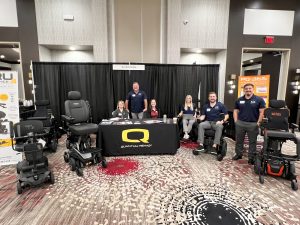
- Exhibit hall with the latest assistive technology
- Breakfast and lunch provided
The rate is: $69 for up to 6 CE credits
Hampton Inn & Suites Washington-Dulles Airport

22700 Holiday Park Drive, Dulles, VA 20166
SCHEDULE OF EVENTS
7:00am - 7:45am: Registration
7:45am - 8:00am: Kick-off
8:00am - 12:00pm: Education Courses
12:00pm - 1:00pm: Lunch
1:00pm - 5:00pm: Education Courses
The Supplier Exhibit Hall will be open throughout
the day with 2 hours of dedicated exhibit hall time.
Click here for full event schedule.
Continuing Education Courses
Aligning Seating Technology with Clinical Needs - Pediatric Wheelchair Cushions and Backs
0.1 CEU / Intermediate
Presented by: TBD
Etac/Ki Mobility
For many years, there were only a couple basic choices of primary supports for pediatric wheelchair users: custom configured or custom molded, with limited choices in between. The options available in seating technology for the pediatric client have expanded considerably over the years, and today there are a number of off-the-shelf, out-of-the-package products available. This greater range of available products requires professionals to be more discerning regarding the variety of choices before them, and recognize which product accomplishes the objective in a clinically appropriate way. We know that children are not just a smaller version of the adult client and that their needs can be different. What does the research say about what is important for the pediatric client regarding postural support and addressing postural asymmetries, maintaining tissue integrity, facilitating function, etc. This reworked presentation will explore the types of seating technology on the market and seek to inform clinical practice by discussing considerations and applications of the various types of technology for primary supports for the pediatric wheelchair user.
Power Assist and Power Add-on for Manual Wheelchairs: A Clinical Perspective
0.1 CEU / Intermediate
Presented by: Lindsey Veety, PT, DPT, ATP/SMS
Sunrise Medical
This course is designed for direct access therapists, suppliers, product representatives, and other seating and mobility professionals to enhance their knowledge and clinical application of the subject matter. Power assist and power add-on systems have rapidly evolved in recent years. They are commonly considered as a method of making a manual wheelchair a more functional option or as an alternative to a power wheelchair. This course focuses on rear, main-wheel, and front-wheel motor options as a power assist. Clinical indications for these technologies and objective measures useful to qualify the technology will be outlined. Funding criteria and justification for reimbursement will be provided. Functional use, training, set up, and care of the devices is also discussed.
Building for the Future – Comprehensive Evaluation and Interview to Address the Equipment Needs of the Pediatric Client
0.1 CEU / Intermediate
Presented by: TBD
Etac/Ki Mobility
Children with special healthcare needs may have many needs that differ from their typically developing peers. This may include adaptive equipment to maintain or improve health status, help them function, and meet developmental milestones. Refined assessment tools allow for early diagnoses, which then leads to early therapeutic intervention. As a result, we can anticipate what the functional impairments are going to be, and what type of equipment may be indicated.
The timing of interventions, including provision of adaptive equipment, can be a critical contributor to success in meeting therapeutic goals. Professionals involved in equipment prescription should recognize what types of equipment may be helpful, based on timing and diagnosis. This presentation will review childhood development and disability and encourage the learner to consider the scope of possible equipment needs for the child with special healthcare needs.
Making Power Wheelchairs Smarter: Exploring the Continuum of SMART Technology
0.1 CEU / Intermediate
Presented by: Lindsey Sharpe, PT, DPT, ATP
LUCI
Many power wheelchair drivers face a variety of issues related to their independence, safety, efficiency, and accessibility as a result of impaired motor control, visual deficits, impaired reaction time, inattention, and various other deficits that are common among wheeled mobility users. This course will review the continuum of currently available SMART technologies that can be incorporated into the power wheelchair to address these issues and improve driver safety, confidence, and independence.
Integrating Expertise: Speech-Language Pathologists Collaborating with OT/PT for High-Tech AAC Evaluation and Treatment
0.1 CEU / Beginner
Presented by: Keri Morgan, MS CCC-SLP
RM Speech
ASHA Approved course
This course is designed to provide professionals with an in-depth understanding of augmentative and alternative communication (AAC) types, with a focus on high-tech AAC solutions. Course emphasizes the importance of a multidisciplinary team approach, demonstrating how speech-language pathologists, occupational therapists, & physical therapists can work together for eval/treatment.
This course will be offered live by an AAC Consultant from RM Speech, an ASHA approved provider. Participants wishing to obtain ASHA CEUs must attend the full session and complete a course evaluation form to receive credit. Credit will be reported to ASHA utilizing this information and will typically appear on your ASHA transcript within 60 days. For special accommodation, please contact RM Speech prior to the course at 877-494-4956. If you have questions regarding this course, please contact Krissy Lofland at krissy.lofland@rmspeech.com.
Beyond Hand Control: Considerations for Proportional Drive Controls at the Head/Chin
0.1 CEU / Intermediate
Presented by: Mary Cabarle, OTR/L, ATP, SMS
Quantum Rehab
For approximately 10% of power wheelchair users, the standard joystick control is not suitable due to factors such as joystick location or required strength. While adaptations can be made to the joystick handles or placement, some individuals may prefer alternative control methods that do not involve using their hands or fingers. This session will explore the innovative options of head, chin, and foot control systems as alternative input methods for power wheelchairs, providing insights on their benefits, challenges, and considerations.
The presentation will delve into the selection and assessment process and will link these findings to the unique features and characteristics of each alternative control method, emphasizing the importance of personalized solutions tailored to individual needs and preferences to maximize outcomes. Discussions will also revolve around functional benefits for users with programming options in wheelchair electronics and specialized controls, emphasizing the role of collaboration with occupational therapists and clinicians in developing and implementing customized solutions for clients.
Case studies and successful implementation examples will be presented to showcase how alternative control options can significantly enhance the quality of life for wheelchair users. The presentation will highlight the critical role of interdisciplinary teamwork in creating effective and sustainable alternative control options for power wheelchairs, driving home the significance of user-centered approaches in improving independence and mobility for individuals requiring specialized controls.
Building Firm Foundations in Early Intervention: Adaptive Standing as AT
0.1 CEU/ Intermediate
Presented by: Wendy Altizer, PT, ATP
Rifton
This course highlights the critical importance of early diagnosis and the timely use of assistive technology to support children from birth to age five. Assessments for early diagnosis can identify the risk of cerebral palsy as early as four months of age. Current participation-based practices will incorporate equipment such as standers to implement postural management, promoting engagement in daily routines while leveraging crucial early brain plasticity. Specific strategies will strengthen communication among providers, families, and the EI team. Understanding key laws under IDEA will enable the team to successfully navigate funding for standing devices and similar essential assistive technology.
Deciding on Power: Clinical Implications and Client Considerations
0.1 CEU / Beginner
Presented by: Mary Cabarle, OTR/L, ATP, SMS
Quantum Rehab
Individuals with chronic medical conditions and long-term disabilities who have a permanent need for a wheelchair require a comprehensive, detailed evaluation of their physical, functional and environmental needs to allow clinicians and ATP suppliers to make appropriate Assistive Technology recommendations for a successful outcome.
This course will examine the algorithmic approach when deciding on power mobility base selection while also discussing key performance parameters and capabilities of power options that lead to equipment recommendations specific to group categories and clinical implications. This framework will provide clinicians with the tools necessary to effectively evaluate and document the medical need for Power mobility intervention and assist the supplier ATP in matching an individual's identified needs to the technology interventions.
3:00-5:00pm
“COMPLEX” Positioning Complex Bodies to Support Activities and Access Throughout Lifespan
0.2 CEU / Intermediate
Presented by: Byron Guisbert
Invacare
This course will identify how balanced seating impacts function and participation. Discuss ways in which power mobility is used as treatment. Discuss positioning techniques that encourage self-initiated movement to interface with various access technologies through fun, meaningful activities.
3:00-4:00pm
Evidence-Driven MWC Configuration: Optimizing Fit and Function for Different Body Types and Propulsion Method
0.1 CEU / Intermediate
Presented by: Ginger Walls, PT, MS, ATP/SMS
Permobil
This 1-hour course is designed to help providers and clinicians develop best practices for recommending complex rehab technology (CRT) manual wheelchairs for individuals with varying body proportions and propulsion styles. Using the ICF model, the course will guide participants through the decision-making process, balancing evidence with functional outcomes to ensure successful CRT seating and wheeled mobility solutions. Through case examples and clinical reasoning discussions, participants will learn to identify clients' individual clinical and functional goals, driving configuration and component recommendations that enhance functional mobility outcomes, participation, and overall satisfaction with the equipment, ensuring a good person-technology match.
4:00-5:00pm
Tailored Seating Solutions for High-Risk Clients
0.1 CEU /Beginner
Presented by: Ginger Walls, PT, MS, ATP/SMS
Permobil
In the wheelchair seating arena, providing a seating system for the clients at high risk for pressure injury can be both intimidating and overwhelming. This 1-hr course provides an in-depth understanding of how to incorporate evaluation findings, seating characteristics, and client goals when formulating equipment recommendations for high-risk clients. Participants will learn to identify clinical indicators of pressure injury risk, apply ISO wheelchair cushion performance standards, and recognize key material traits in seating products. A complex case example will be discussed to illustrate the process of integrating evidence and client goals to enhance functional independence.
By the end of this course, participants will be equipped with the knowledge to make informed, evidence-based, and client-centered seating recommendations, ultimately improving the quality of life for wheelchair users.
Explore the course offerings. You can pick & choose the classes you'd like to attend during registration.