
DETROIT MOMENTUM ACADEMY EDUCATION & TECHNOLOGY EXPO
Friday, August 21, 2026
The MINT at Michigan First Conference Center
Lathrup Village, MI
Event Highlights
- Earn up to 6 hours of continuing education (CE) credits for PT, PTA, OT, COTA, ATP
- CE Courses approved by TPTA & TOTA
- Network with industry professionals
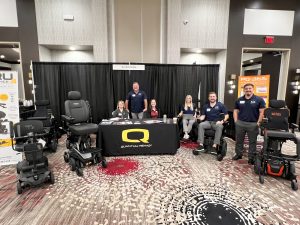
- Exhibit hall with the latest assistive technology
- Learn about NSM CRT & Home Access offerings
- Breakfast and lunch provided
The rate is: $69 for up to 6 CE credits
HOTEL RECOMMENDATION
The Westin Southfield Detroit

1500 Town Center, Southfield, MI 48075
SCHEDULE OF EVENTS
7:00am - 7:45am: Registration
7:45am - 8:00am: Kick-off
8:00am - 12:00pm: Education Courses
12:00pm - 1:00pm: Lunch
1:00pm - 5:00pm: Education Courses
The Supplier Exhibit Hall will be open throughout
the day with 2 hours of dedicated exhibit hall time.
Click here for full event schedule.
Continuing Education Courses
Building for the Future – Comprehensive Evaluation and Interview to Address the Equipment Needs of the Pediatric Client
0.1 CEU / Intermediate
Presented by: TBD
Etac/Ki Mobility
Children with special healthcare needs may have many needs that differ from their typically developing peers. This may include adaptive equipment to maintain or improve health status, help them function, and meet developmental milestones. Refined assessment tools allow for early diagnoses, which then leads to early therapeutic intervention. As a result, we can anticipate what the functional impairments are going to be, and what type of equipment may be indicated.
The timing of interventions, including provision of adaptive equipment, can be a critical contributor to success in meeting therapeutic goals. Professionals involved in equipment prescription should recognize what types of equipment may be helpful, based on timing and diagnosis. This presentation will review childhood development and disability and encourage the learner to consider the scope of possible equipment needs for the child with special healthcare needs.
Evidence-Driven MWC Configuration: Optimizing Fit and Function for Different Body Types and Propulsion Method
0.1 CEU / Intermediate
Presented by: Ashley Detterbek, DPT, ATP, SMS
Permobil
This 1-hour course is designed to help providers and clinicians develop best practices for recommending complex rehab technology (CRT) manual wheelchairs for individuals with varying body proportions and propulsion styles. Using the ICF model, the course will guide participants through the decision-making process, balancing evidence with functional outcomes to ensure successful CRT seating and wheeled mobility solutions. Through case examples and clinical reasoning discussions, participants will learn to identify clients' individual clinical and functional goals, driving configuration and component recommendations that enhance functional mobility outcomes, participation, and overall satisfaction with the equipment, ensuring a good person-technology match.
9:00-10:00am - Exhibit Hall Time
10:00-11:00am - CEU Session
ABCs of Supported Standing and Stepping
0.1 CEU / Beginner
Presented by: Jason Mehler, PT, DPT, PCS
Rifton
Many published research articles recognize the benefit of supported standing and stepping. This session brings a fresh perspective summary to these research articles and offers knowledge translation that can impact our interventions as practitioners. Evidence-informed practice that focuses on participation-based intervention and incorporates supported stepping and standing will be discussed. Content will include an overview of the research and attendees will learn simple ways to link research to practice. This presentation bridges the "know-do" gap by translating research into relatable, actionable, and context-specific formats. The attendees will also learn how to share that knowledge with their colleagues and families in a way that is easy to understand.
9:00-10:00am - CEU Session
10:00-11:00am - Exhibit Hall Time
Tailored Seating Solutions for High-Risk Clients
0.1 CEU / Beginner
Presented by: Ashley Detterbek, DPT, ATP, SMS
Permobil
In the wheelchair seating arena, providing a seating system for the clients at high risk for pressure injury can be both intimidating and overwhelming. This 1-hr course provides an in-depth understanding of how to incorporate evaluation findings, seating characteristics, and client goals when formulating equipment recommendations for high-risk clients. Participants will learn to identify clinical indicators of pressure injury risk, apply ISO wheelchair cushion performance standards, and recognize key material traits in seating products. A complex case example will be discussed to illustrate the process of integrating evidence and client goals to enhance functional independence.
By the end of this course, participants will be equipped with the knowledge to make informed, evidence-based, and client-centered seating recommendations, ultimately improving the quality of life for wheelchair users.
11:00-12:00pm - Lunch
12:00-1:00pm - CEU Session
The Drive for Function and Development: Alternative Drive Control Considerations for Early Power Mobility
0.1 CEU / Beginner
Presented by: TBD
Quantum Rehab
Assessing an end user for power mobility can be an intimidating task. Decisions that are made will have an impact on the individual’s quality life, functional mobility, physical well-being, and social interactions. This task can seem even more daunting when it comes to the pediatric end user. Children have the natural desire to move, explore, and learn. Research has shown that there is a strong correlation between self-initiated mobility and the development of visual, cognitive, social, language, and perceptual skills. This course will discuss the characteristics and decision-making process for alternative drive control devices, as well as the special considerations on early power mobility intervention. Potential assessment and training tools for pediatric power mobility will also be explored.
11:00-12:00pm - CEU Session
12:00-1:00pm - Lunch
When You Know Better, You Can Do Better. A course highlighting learning opportunities through less-than-ideal initial outcomes
0.1 CEU / Intermediate
Presented by: Leah Cole, OTL, MOT, CEAC
Ride Designs
When providing custom seating systems, successful outcomes are dependent upon proper execution of standardized procedures including: A thorough discussion of needs, detailed mat assessment, precise measurements, accurate installation of components, individualized fitting protocols, and follow up appointments for fine tuning. Seems easy enough, right? A missed opportunity at any of these steps can leave the recipient with unintended struggles. How do we move past obstacles that inevitably arise during the process? This course is designed to highlight personal experiences of overcoming inadvertent errors, strategy changes and less than desired outcomes.
Pediatrics: Don’t Overthink It, Re-Think It For Independent Mobility
0.1 CEU /
Presented by: Christie Hamstra, PT, DPT, ATP/SMS
Motion Composites
This course highlights the critical importance of early diagnosis and the timely use of assistive technology to support children from birth to age five. Assessments for early diagnosis can identify the risk of cerebral palsy as early as four months of age. Current participation-based practices will incorporate equipment such as standers to implement postural management, promoting engagement in daily routines while leveraging crucial early brain plasticity. Specific strategies will strengthen communication among providers, families, and the EI team. Understanding key laws under IDEA will enable the team to successfully navigate funding for standing devices and similar essential assistive technology.
Making Power Wheelchairs Smarter: Exploring the Continuum of SMART Technology
0.1 CEU / Intermediate
Presented by: Lindsey Sharpe, PT, DPT, ATP
LUCI
Many power wheelchair drivers face a variety of issues related to their independence, safety, efficiency, and accessibility as a result of impaired motor control, visual deficits, impaired reaction time, inattention, and various other deficits that are common among wheeled mobility users. This course will review the continuum of currently available SMART technologies that can be incorporated into the power wheelchair to address these issues and improve driver safety, confidence, and independence.
3:00-5:00pm
“COMPLEX” --Positioning Complex Bodies to Support Activities and Access Throughout Lifespan
0.2 CEU/ Intermediate
Presented by: Byron Guisbert
Invacare/ASL
This course will identify how balanced seating impacts function and participation. Discuss ways in which power mobility is used as treatment. Discuss positioning techniques that encourage self-initiated movement to interface with various access technologies through fun, meaningful activities.
3:00-4:00pm
Deciding on Power: Clinical Implications and Client Considerations
0.1 CEU / Beginner
Presented by: Jennifer Janowicz, PT, DPT
Quantum Rehab
Individuals with chronic medical conditions and long-term disabilities who have a permanent need for a wheelchair require a comprehensive, detailed evaluation of their physical, functional and environmental needs to allow clinicians and ATP suppliers to make appropriate Assistive Technology recommendations for a successful outcome.
This course will examine the algorithmic approach when deciding on power mobility base selection while also discussing key performance parameters and capabilities of power options that lead to equipment recommendations specific to group categories and clinical implications. This framework will provide clinicians with the tools necessary to effectively evaluate and document the medical need for Power mobility intervention and assist the supplier ATP in matching an individual's identified needs to the technology interventions.
4:00-5:00pm
A Twist on Power Assist for the Manual Wheelchair Rider
0.1 CEU / Intermediate to Advanced
Presented by: TBD
Etac/Ki Mobility
It is well documented that there is a high rate of upper extremity repetitive strain injury (RSI) among manual wheelchair riders. In addition to the risk of RSI, physical ability and the environment of use can pose further challenges to mobility. These factors can affect accessibility, speed, distance, and duration of travel, potentially limiting an individual’s social participation. Even the act of propulsion itself can hinder tasks that require the use of one or both hands during movement. Power assist technology has provided a solution to these challenges for many wheelchair riders.
While power assist technology has been available for some time, its popularity is increasing as more professionals and users recognize the advantages it can provide. To assist users in making informed prescriptive decisions, professionals must understand this evolving technology and be aware of the increasing diversity of product choices available. This presentation will discuss the mobility and health-related challenges that come with propelling a manual wheelchair. We will consider alternatives to address these challenges and review the various types of power assist devices currently available.
Explore the course offerings. You can pick & choose the classes you'd like to attend during registration.