

January 2026 | In This Issue:
- Taking the Confusion Out of Prior Authorization - and Starting the Year Prepared
- Client Spotlight: Cheryl Angelelli - helping more people fall in love with dancing!
- Camping Made Possible: Accessibility Tips for Families of All Abilities
- NSM Helps Take the Hassle Out of Managing Medical Supplies
- January Product Spotlights
Taking the Confusion Out of Prior Authorization - and Starting the Year Prepared
Helping you understand what prior authorization is and how planning early in the new year can make the process smoother.
Is your current wheelchair over 5 years old, or are you planning for potential repairs to your mobility equipment?
Navigating prior authorization requirements with your health insurance carrier can be one of the most confusing parts of the process. At National Seating & Mobility (NSM), we understand the challenges-and we want to help make the process feel less frustrating and more manageable.
Now that we're in a new year, it's a great time to review your equipment needs, insurance coverage, and prior authorization requirements early, so you're set up for success throughout 2026. Starting the year with these conversations can help reduce delays and stress later on.
What is Prior Authorization?
Prior authorization is basically asking your health insurance carrier or plan to agree to pay for new equipment or a repair to your existing equipment BEFORE anything is ordered. Be aware that some insurance carriers may not require prior authorization in some cases, so it's important to learn what your health insurance carrier requires.
The prior authorization process involves several steps and types of documentation, including:
- A prescription for CRT equipment,
- A seating evaluation to determine the best CRT equipment for your needs,
- An equipment estimate that details the cost of the equipment you need, and
- A Letter of Medical Necessity is a document that explains why specific medical equipment is essential for your health and well-being.
Once you submit the required documentation to your health insurance carrier, they will review it and either approve or deny the request based on their specific guidelines for coverage.
Detailing the Prior Authorization Process for New CRT Equipment
Requirement 1: Prescription for CRT Equipment
What It Is: A prescription from your physician stating that you need to be evaluated for a mobility device. You must have a prescription in order to set up a seating evaluation or request a repair. Most health plans require an in-person appointment with your physician that is focused on your mobility needs.
Who's Responsible: Your doctor
💡 Pro Tip: Prior authorization works best when steps happen close together. Starting the process and pausing for months may mean starting over.
Requirement 2: Seating Evaluation
What It Is: An assessment performed by a physical or occupational therapist or physiatrist and an Assistive Technology Professional (ATP) to evaluate your physical and functional needs to help determine the best mobility solutions for your needs and lifestyle.
Who's Responsible: Your therapists (physical or occupational) or physiatrist and ATP
Requirement 3: Equipment Quote
What It Is: After your seating evaluation, your CRT equipment supplier will create a detailed list of the recommended equipment and their associated costs.
Who's Responsible: Your CRT supplier
Requirement 4: Letter of Medical Necessity (LMN)
What It Is: A formal letter or document that justifies your need for the prescribed mobility equipment, explaining how it addresses your specific condition, diagnosis and functional limitations. This is completed after your seating evaluation.
Who's Responsible: Your physical or occupational therapist or physiatrist completes the assessment, and the prescribing physician reviews and signs off-documenting their agreement with the recommendations.
Requirement 5: Standard Written Order
What It IS: A detailed prescription outlining the equipment being provided.
Who's Responsible: Your doctor
What About Repairs?
When it comes to repairs, many insurance carriers or health plans also require prior authorization before ordering parts to fix the problem. Other documentation requirements that health insurance carriers commonly require for repairs include:
- An updated prescription or Statement of Continued Medical Necessity,
- A repair assessment conducted by your wheelchair supplier,
- A repair estimate, and
- Proof of Original Purchase.
Prior authorization is a team effort! In most cases, your CRT supplier will collect and submit the required documentation to your insurance carrier, but your CRT supplier needs your help to ensure the process runs smoothly. Seek to understand your health insurance carrier's prior authorization requirements and find ways to support the process. Here are a few ideas of how you can help.
- Keep copies of all documentation for your own records.
- Understand your insurance carrier's prior authorization requirements for new equipment and repairs so you can anticipate documentation needs.
- Know who to reach out to if a requirement is missing. Stay in contact with your funding specialist so you can quickly follow up on any missing items.
- Be proactive. Request that your doctor, health care provider or therapists send information to your wheelchair provider as quickly as possible. As the insured person, follow up with your health insurance carrier once prior authorization has been submitted and ask that the decision be expedited.
- Be prepared. Communicate with your wheelchair provider quickly if there are any updates or changes to your coverage. If you change insurance carriers during the process, understand that all of your information will have to be gathered and resubmitted to your new health insurance carrier, slowing down the process of getting new equipment or a repair.
Look Ahead, Stay Informed
Efforts to reduce administrative barriers and streamline the prior authorization process are underway industry-wide. Some health plans have pledged to cut back on prior authorization requirements and speed up decisions by 2026.
Staying informed about changes at both the insurance-carrier and policy-level can help you advocate for yourself and work with NSM to navigate these evolving requirements.
If you have questions about how prior authorization might affect your new equipment or repairs this year, your NSM team is here to help-just reach out.
Client Spotlight: Cheryl Angelelli
Helping more people fall in love with dancing!
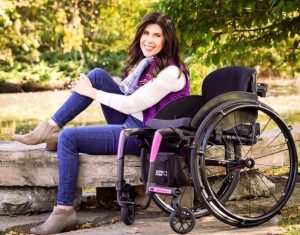 Wheelchair ballroom dancer. Paralympic swimmer. Model. Dog mom. You could write a story from Cheryl Angelelli's Instagram profile alone. A world-class wheelchair ballroom dancer and a Paralympic medalist, Angelelli helped to found Dance Mobility, a wheelchair dancing program that offers dance lessons to adults and children with disabilities in the Detroit area.
 In 1996, Angelelli, then working as a journalist, traveled to Atlanta to cover the 1996 Paralympics. She'd heard about the Paralympics, but she didn't understand the elite level of the competition until she saw it for herself. She set a goal to make the U.S. swim team and compete at the Paralympics in 2000.
 She loved dancing so much that she wanted to find a way to share it with more people. Armed with an idea, Angelelli approached the Rehabilitation Institute of Michigan Foundation with a request to start a wheelchair ballroom dancing program-and Dance Mobility was born.
Camping Made Possible
Accessibility Tips for Families of All Abilities
Who says camping has a season? The Riley family loves outdoor adventures year-round and shares practical tips to make accessible camping and travel easier, more comfortable, and more fun for CRT users. From planning ahead to choosing the right gear, their experience can help you make the most of every trip.
 When planning a trip, what are some of the questions you ask or decisions you make beforehand?
 When planning a trip, what are some of the questions you ask or decisions you make beforehand?
 You need to determine what you will travel in that meets your needs. Will your accessible vehicle, if you have one, meet the needs for a long road trip? Will you rent an accessible vehicle or RV? If you plan to stay overnight on your way to your destination, are there accessible hotels or campsites en route?
Also, be sure to research the accessibility at the campsite you plan to rent at your final destination and its proximity to an accessible restroom. Often non-accessible restrooms at campgrounds are very tricky to get into without a lot of heavy lifting and maneuvering, which also creates a lack of privacy. What is your ability to lift? If you can't lift very much, you may need to travel with a portable lift to make these transitions easier.
If you're driving to your campsite, are there benefits to mapping out your route in advance?
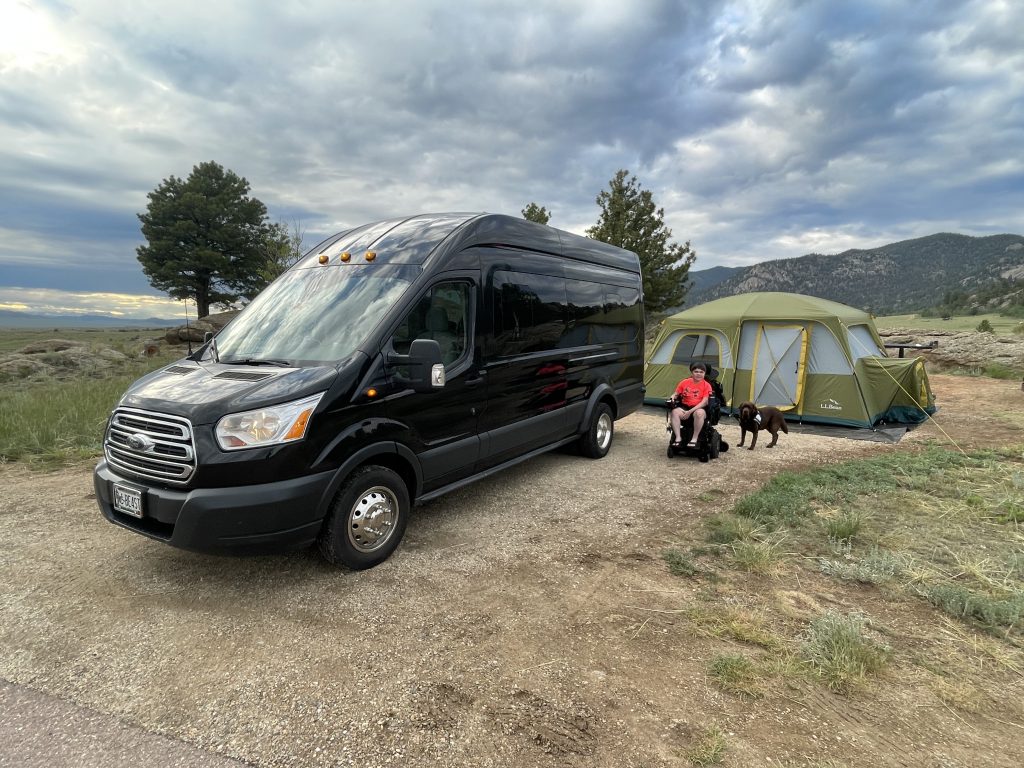
We find it helpful to map our route and determine where to stay in advance. That gives us the opportunity to ensure we get an accessible room or campsite with appropriate restroom facilities for our needs. We also research the area for accessible activities and figure out how to make activities that aren't easily accessible doable for us.
For wheelchair users and their families and friends, what advice can you offer about selecting a campsite?
Select an accessible campsite, but also research to ensure that the area where you will put your tent is flat and you can drive a power wheelchair up to it. Having a lightweight transport chair for getting in and out of the tent-and sometimes into the shower areas-is helpful. Our sons sleep more comfortably on a cot with a sleeping pad rather than on the ground, and that also makes it easier for us to pick them up. Again, depending on your ability to lift, you may want to bring a slide board or lift with you. We also have a tent we can stand up in, which makes transfers, helping with dressing and other tasks a little easier.
If you use a power wheelchair, you'll want to think about how you'll charge the battery. If there's no power at your site, you will need a portable charger or generator of some sort. If you use your vehicle to charge a power wheelchair battery, you risk killing your car battery.
When planning activities-the things you'll do and see on your trip-what are some things wheelchair users and their caregivers should consider?
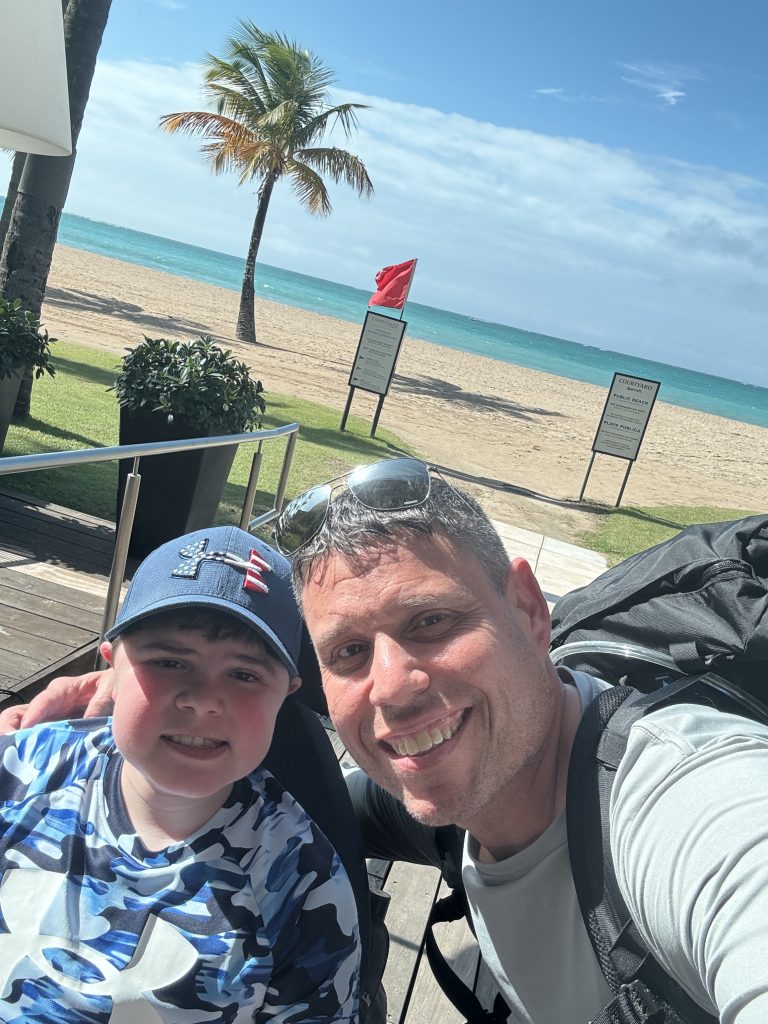
Research thoroughly. Online information can be misleading, so call ahead to confirm details. Ask about ramp access, transitions and any barriers. For example, some places may consider a 6-inch step "accessible" when it's not for many CRT users. Specific questions can make or break your plans-especially in areas with variable terrain, like islands with gravel paths.
A National Parks Access Pass can be very helpful too, granting free entry for disabled individuals and up to three guests at all National Parks. We've taken our boys to accessible viewing trails in places like Arches National Park and Washington D.C., which has excellent accessibility.
Traveling with your sons, who both use wheelchairs, takes a lot of planning. Why would you encourage other CRT users and their friends or families to travel?
Why not? It does require some additional advanced planning and research, but it's worth it. There may be a learning curve at first-and you'll discover things you wish you'd packed or questions you should have asked-but you'll know for the next time. You might face unexpected challenges and have to get creative with your solutions, but as long as you're together and having fun, it makes for great memories.
You sometimes travel with one or both of your sons' service dogs. Any advice for CRT users who might be traveling with a service animal?
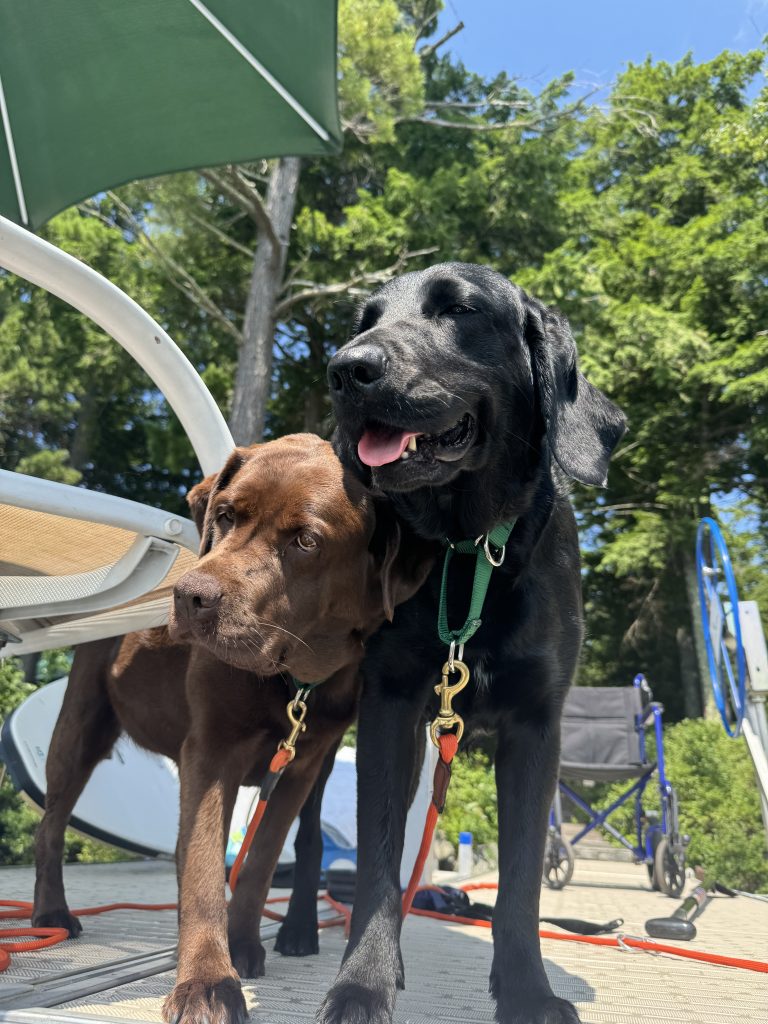
Once you know where you're going, contact your vet to make sure there aren't additional precautions you need to take or vaccinations your service dog might need. For example, in Georgia, dogs aren't required to have a vaccination for Lyme's disease, but in Maine they are.
Any last pieces of advice for fellow travelers or campers?
A disability doesn't have to stop you from traveling. Just this year, one or both of us have traveled with our sons to Puerto Rico, Hurricane Island and Monhegan Island for school trips, taken a cross-country road trip, camped in Colorado and Utah with the Trekkers, and, most recently, gone to Hawaii for a Make-A-Wish trip. We traveled to Baltimore, Boston, Philadelphia, throughout New England, New Jersey, New York, Florida and more. We love to travel!
Looking for ramps, lifts or other accessibility products that might enhance your travel plans? Reach out to your local National Seating & Mobility branch to learn more about your options.
NSM Helps Take the Hassle Out of Managing Medical Supplies
We work with your insurance, healthcare providers and top manufacturers to keep your supplies coming - seamlessly.
For caregivers and those who rely on home medical supplies, juggling your supply needs and shipments can easily become a full-time job. National Seating & Mobility (NSM) is already a trusted partner for Complex Rehabilitation Technology (CRT) users, but we can also take the stress and hassle out of managing your medical supply needs - so you can focus on what's most important to you: living your life.
In addition to mobility solutions and home accessibility products, NSM also offers a wide range of home medical supplies - including incontinence, urological and enteral. We're committed to creating a customized experience that works for you and takes away some of the hassle of managing medical supply needs for you or your loved ones.
Medical Supplies & NSM
At NSM, we want to help our clients live life on their own terms. We're dedicated to helping our clients maintain their independence and self-reliance, and our comprehensive selection of home medical supplies is one of the many ways we do that.
Whether you're looking for enteral, urological or incontinence supplies, our dedicated customer care team is specifically trained to guide you through the process and design a tailored medical supplies plan that fits your needs and streamlines your life by making sure you never run out.
At NSM, we work with all major manufacturers to meet your medical supplies needs, including:
- Enteral: Medical supplies such as feeding tubes or bags, pumps or formula that deliver nutrition to clients who can't swallow safely.
- Urological: Medical supplies that help clients with urological needs such as catheters, tubing and more.
- Incontinence: Products designed to support individuals with incontinence needs.
How It Works
We're committed to making sure you have the supplies you need when you need them - and we understand the importance of never running out. Here's how it works:
- Connect with the NSM Medical Supplies team. Call (844) 292-8887 or email the Medical Supplies Care Team at SuppliesReferral@nsm-seating.com. They'll walk you through the process step by step.
- Trust us with the paperwork. Our experienced team understands the process of working with insurance carriers to gather the necessary insurance documentation to set up a recurring order. NSM works with most major insurance plans, and our knowledgeable Medical Supplies Care Team members will handle the documentation process from start to finish. Clients work with the same team member throughout the journey, making the process even easier.
- Your products are delivered to your door. After your order is set up in the system, it will arrive at your door on a regular schedule, so you always have the supplies you depend on. Your next shipment will arrive a few days before your last order runs out, so you never have to go without vital medical supplies.
- We'll create an ongoing, customized plan that ensures you have the products you need when you need them. As your paperwork expires, our Medical Supplies Care Team will work with you and your healthcare providers to update your documentation to ensure the shipments you depend on keep coming.
Learn How NSM Can Ease the Stress of Getting Your Needed Medical Supplies
Access to your medical supplies can sometimes mean the difference between life and death - and we understand that at NSM. We strive to take the stress and worry of juggling your medical supplies needs off your shoulders. Whether you need enteral, incontinence or urology supplies, we're here to make your life a little easier. Learn More
January Product Spotlights
 Rifton Adaptive Tricyle
 Rifton Adaptive Tricyle
Rest when you need it, ride when you're ready! We're excited to announce a NEW freewheel feature for the Rifton Adaptive Tricycle! The freewheel allows caregivers to disconnect the pedals from the drivetrain so the tricycle can coast while the pedals stay stationary. This provides the opportunity for the rider to rest when tired or needing to be transported quickly, while remaining seated on the tricycle. The tricycle can switch between drive mode and freewheel mode easily with the flick of a switch near the rear wheels.
We've also added new high traction tires designed to improve wheel traction on outdoor surfaces such as gravel, woodchips, dirt or mud. They improve the experience of rougher outdoor riding, but roll equally well on hard, smooth surfaces due to a smooth center band. The tires are durable and made of solid urethane foam. High traction tires are retrofittable on all old X300 tricycles.
Contact your local NSM branch representative to learn more!
 Quantum Edge 4
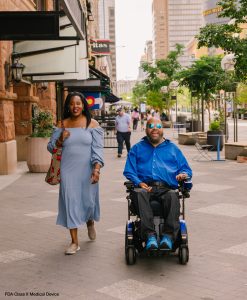 Quantum Edge 4
🎉 New Year, New Possibilities with Quantum Rehab!
Step into 2026 with mobility that moves with you. The Quantum Rehab Edge 4 power chair sets a new standard in advanced mobility-engineered with cutting-edge suspension, enhanced stability, and next-generation electronics. From tight indoor spaces to uneven outdoor terrain, Edge 4 delivers a smooth, responsive ride, supporting independence, comfort, and confidence wherever life leads.
And that's just the beginning. Quantum Rehab's lineup helps you explore the world your way:
-
Edge 4: Unmatched performance, precision, and style.
-
R-Trak: Reinvigorates rear-wheel and outdoor capability.
-
Outback: Takes all-terrain mobility to the next level.
✅ Advanced technology
✅ Superior comfort
✅ Designed for your lifestyle
✨ Make 2026 the year you go further. With Quantum Rehab, the possibilities are endless.
Contact your local NSM branch representative to learn more!