

April 2026 | In This Issue:
- Did You Know? Preventive Maintenance Helps Keep You Moving
- Celebrating World Autism Month: Stories of Understanding, Safety & Inclusion
- April Product Spotlight: RM Speech & Cubby Bed 2
- Helpful Tool: Breaking Down the Process of Getting a New Chair
- Client Spotlight: Sean Simonson will NEVER slow down!
DID YOU KNOW?
Preventive Maintenance Helps Keep You Moving
While preventive care, such as bi-annual dental exams, preventive screenings and physical exams, is routinely covered by health insurance providers, preventive maintenance for complex rehabilitation technology (CRT) equipment is generally not covered. As a result, many CRT users feel they must wait for a part to fail before seeking a repair, which often leads to longer repair times, decreased mobility and independence, lost income, missing out on family and social events, and sometimes even contributes to medical complications.
How Would Coverage for Preventive Maintenance Help Complex Rehabilitation Technology (CRT) Users?
CRT equipment is highly customized and often comprised of thousands of components. Since CRT users use mobility equipment daily, the wear and tear adds up. Parts wear out or require frequent maintenance to keep the wheelchair working at optimal levels. Like routine oil changes or tire rotations on a car or scheduled tune-ups for household appliances, preventive maintenance for CRT equipment would benefit CRT users and their caregivers in several ways:
- Reducing catastrophic equipment failures by catching wear and tear before it contributes to additional damage or malfunctions.
- Ensuring frequent adjustments so that the chair is configured to a CRT user’s specific needs, including posture, alignment, pressure distribution, comfort and more.
- Reducing health risks that can develop when a CRT user is immobile or incorrectly seated, such as pressure sores and musculoskeletal issues or falls and collisions caused by equipment failure.
- Preventing loss of mobility, allowing CRT users to work, spend time with friends and family and keep moving through their lives.
- Minimizing repair wait times since catastrophic equipment failures often lead to lengthy repairs and allows CRT users and caregivers to plan ahead for routine maintenance rather than deal with an emergency when a chair fails.
What Does Data Reveal about the Value of Preventive Maintenance for CRT Equipment?
Researchers have conducted several studies that point to the value of preventive maintenance for CRT equipment in preventing injuries, accidents and medical complications. Chair failures can also affect income, mental health and participation in work, family and community life, which studies have noted as well.
Here are a few highlights:
- Research has shown that proactively checking up on equipment can lead to fewer accidents.
- While most CRT equipment is intended to have a five-year “useful life,” a number of components and parts routinely fail before that. These include casters, tires, bearings and more for manual chairs and electronics, batteries and motors for power chairs.
- The more complex the mobility equipment, the higher the probability of a high-risk chair failure, often affecting CRT users with the most severe diagnoses and need for mobility solutions.
- When a chair failure results in immediate consequences—being stranded, missing work or appointments—CRT users face a higher likelihood of developing pressure sores or being hospitalized.
Learn more about the research that supports the value of preventive maintenance in ensuring CRT users can enjoy the highest levels of mobility and independence possible.
Educate Yourself: Tennessee was the first state to enact legislation requiring its state Medicaid program to cover annual preventive maintenance for CRT equipment but legislation is under discussion or consideration in several states. Tennessee’s legislation, which took effect in July 2024, requires qualified technicians to perform all preventive maintenance services under manufacturer guidelines. Learn if legislation is being considered in your state.
Did You Know You Can Make a Difference?
As a CRT user, your experience can help legislators and health insurance carriers understand the value of coverage for preventive maintenance. You can help by:
Research What’s Happening in Your State: Follow advocacy organizations like NCART, iNRRTS, AAHomecare and other advocates to stay up-to-date about ongoing efforts and learn what is happening in your state.
Share Your Story: Lawmakers and health insurance providers may not fully understand the positive impact preventive maintenance could have on your daily life. By sharing your story and real examples of how equipment failures have impacted your life, work and health, you can help them understand the benefits of covering preventive maintenance would provide. Find your elected officials.
Make Your Voice Heard: In many ways, private healthcare insurance providers follow the example of Medicare and Medicaid. Call the Centers for Medicare and Medicaid Services (CMS) directly at 1-800-633-4227 to urge coverage of preventive maintenance.
Celebrating World Autism Month
Stories of Understanding, Safety & Inclusion
April marks World Autism Month—a time dedicated to fostering greater understanding, encouraging acceptance, and driving meaningful, lasting change for individuals with Autism Spectrum Disorder (ASD) and other neurodevelopmental conditions. Throughout the month, communities come together to raise awareness, share stories, and promote inclusion, helping to create a world where every individual is valued, supported, and empowered to thrive.
Over the coming months, we’ll share stories and insights — starting with Liam’s — to highlight how adaptive equipment and technologies can transform daily life. From improving safety and sleep to fostering independence and connection, these solutions help create a world where every person feels valued, supported, and included.
Real-Life Example of How a Safety Bed Changed Liam’s Life
Adaptive equipment and technologies play a critical role in supporting children and families with complex medical and neurodevelopmental needs. These tools make daily activities safer and more manageable — from helping a child sleep securely at night to enabling effective communication. By improving safety and accessibility, adaptive technologies support greater independence and strengthen daily interactions.
Adaptive technologies contribute to improved outcomes by:
- Increasing independence and social engagement, including self-care
- Supporting physical, emotional and cognitive development
- Enhancing quality of life and boosting caregiver confidence
- Enabling safe participation and connection within the home and community.

Like most parents, Brian and Agustina McCarthy want to ensure their son, Liam, is happy, healthy and safe. But because Liam, who’s 7 years old, lives with Level 3 autism, PICA and epilepsy, that can be a little more complicated for the McCarthy family.
“There’s a level of focus that’s required when monitoring Liam that we never knew we had or could even be achieved,” Brian says. “He’s a wonderful, caring, loving, curious, determined and silly little man, but his body is compelled to consume non-food items and seek sensory input by climbing on anything and everything tall.”
Liam, who was diagnosed with Autism Spectrum Disorder when he was around 4 and epilepsy just last year, lives an active life. Brian describes his son as having “impeccable balance,” but because of Liam’s epilepsy diagnosis, climbing can be dangerous.
His parents make sure he’s supervised during the day, but nighttime proved to be a little harder to manage. After a night when Liam climbed atop his bureau to fall into his bed, his parents knew they needed a safety bed in addition to video monitors.
“After his epilepsy diagnosis, they told us he really shouldn’t be climbing anything higher than two feet,” Brian says. “It’s a huge danger if he wakes up in the middle of the night, doesn’t make a peep and climbs [on top of his bureau], and we don’t wake up. It’s a very serious safety issue.”
Even before Liam was diagnosed with epilepsy, helping him to settle and safely sleep through the night had been difficult.
We’ve spent at least four years anxious about Liam quietly engaging in dangerous sensory seeking or self-injurious behavior while we’re sleeping,” Brian says. “We’ve put 28,000 miles on our car in nine months just to drive him around to get him to sleep.”
Brian, Agustina and Liam’s ATP, Peter Eastman, initiated the process of ordering a safety bed at their local NSM branch, then worked with Kim Giordano, NSM Funding Supervisor, and Justyna Wozny, an NSM Funding Specialist, to navigate the insurance approval process. Liam received his Cubby Bed in March of last year.
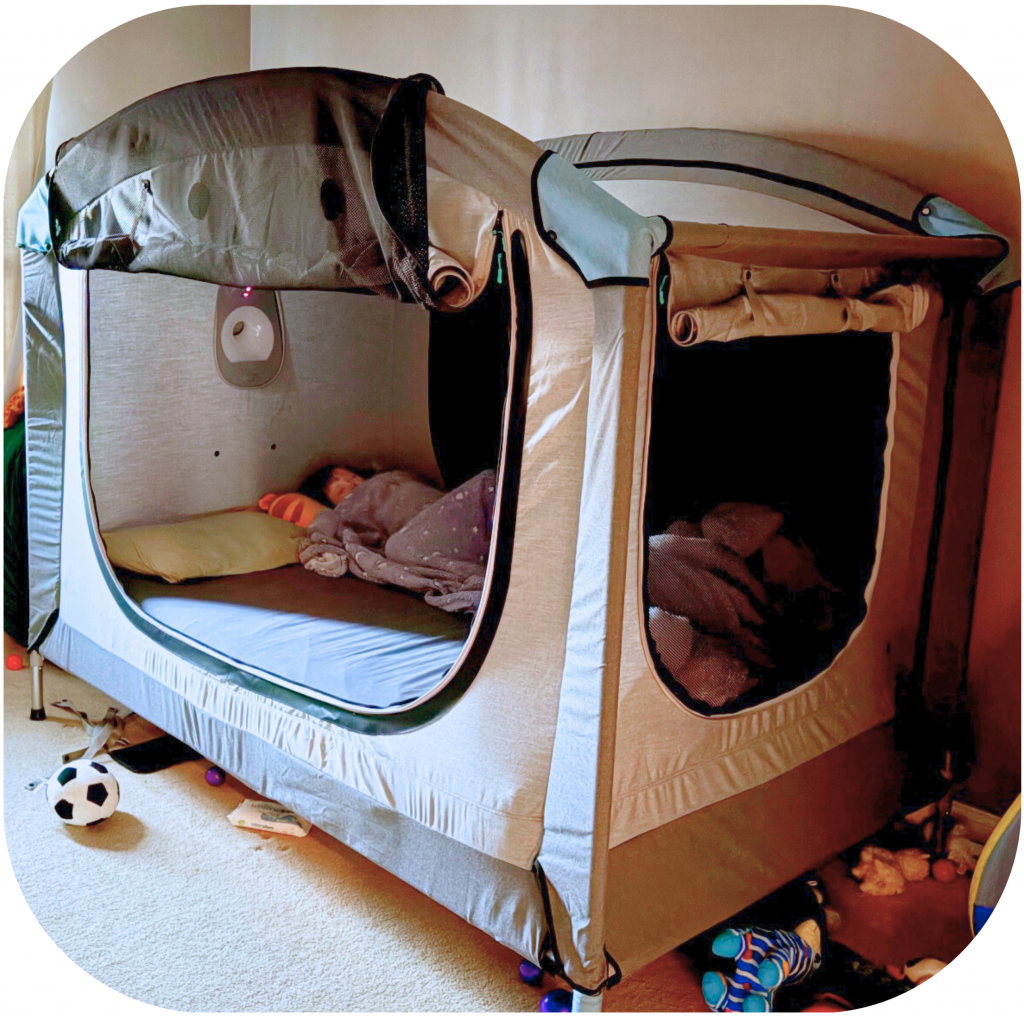
“Kim and Justyna were so understanding of our need for things to be expedited,” Brian says. “At each step, they told us exactly what actions we needed to take to move the process further to completion. They were incredibly knowledgeable, friendly and nurturing during what can be an absolutely crazy, intimidating, confusing and frustrating process.”
For the McCarthy family, the experience was a primary example of NSM working to meet client needs — something NSM’s funding team prides itself on, according to Kim Giordano, NSM Funding Supervisor.
“We strive to be subject matter experts and advocate fiercely for our clients to ensure they receive the necessary equipment,” Giordano says. “It was rewarding for Justyna and our team to be a part of an effort that allows this family to rest peacefully at night, knowing their son is secure.”
Learn More about how NSM Can Support You
Due to autism, PICA, and epilepsy, Liam required a safe nighttime solution to prevent injury. A medically approved safety bed provided security, improved sleep, and peace of mind for his family.
👉 Click here to discover how Cubby Beds can create a safer, more restful space for your child.
April Product Spotlight
 RM Speech
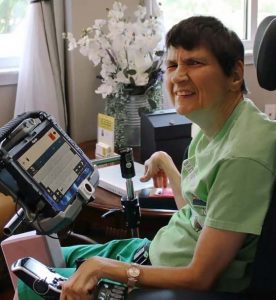
At RM Speech, in partnership with National Seating & Mobility, we empower individuals to communicate through technology—ensuring every voice is heard. We understand that communication challenges can be complex, which is why we design and manufacture speech-generating devices tailored to each individual’s unique needs.
Our team-based approach includes experienced speech-language pathologists who support both clients and treating clinicians throughout the entire process—from evaluations and physician coordination to patient and caregiver training. We offer a wide range of access options, including direct touch, eye gaze, head tracking, and switch access, along with a five-year warranty and flexible software solutions that can evolve as needs change.
This commitment to customization enables true feature matching—delivering solutions that adapt to the individual, not the other way around. We believe everyone deserves a voice and meaningful connection to the world around them, and we are proud to help make that possible.
👉 Contact your local NSM branch representative to learn more or start the evaluation process.
Cubby Bed 2
For many families, bedtime can be challenging—and sometimes unsafe. Children with complex medical or neurodevelopmental needs may experience wandering, climbing, or frequent waking, adding stress for caregivers.
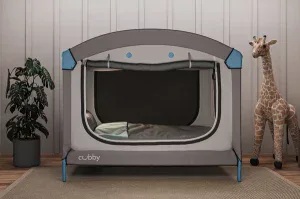 Cubby Bed 2 is designed to help, featuring a fully enclosed, safety-focused design with the integrated Dream Hub for real-time monitoring, alerts, and customizable sound and lighting to support better, safer sleep. Each bed includes a canopy, frame, three safety sheets, camera, mic, circadian light, and speaker—everything needed for a supportive, secure sleep environment.
Why families choose Cubby Beds:
- Enhanced safety and reduced fall risk
- Peace of mind with monitoring features
- Supports healthy sleep routines
- Customizable for each child’s needs
Cubby Beds are often recommended for children with autism, seizure disorders, or sensory and mobility challenges.
Better sleep starts with the right support—for your child and your family.
👉 Contact your local NSM branch representative to learn more or start the evaluation process.
Helpful Tool
Breaking Down the Process of Getting a New Chair
Client Spotlight
Sean Simonson will NEVER slow down!
Sean Simonson’s list of accomplishments is impressive. Firefighter, world champion mountain bike racer and Harvard graduate are a few of his many achievements.
Dropping In
 Growing up in Southern California, Simonson was an avid mountain bike racer and surfer. At 14, all he dreamed of was becoming a firefighter. In 1997, after graduating from the University of California, Santa Barbara, that dream became a reality when Simonson was hired as a firefighter for the city of Milpitas.
Diving into Downhill
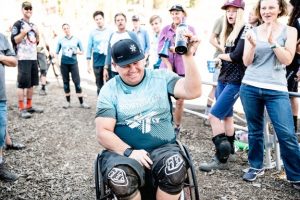 It was a promise Simonson quickly made good on.
Upshift
 In 2019, Simonson was invited to the Enduro World Series circuit in Italy, a race intended to take place in the summer of 2020.
Getting Started
- Always wear a helmet and never ride alone.
- Set cycling goals that are out of your comfort zone and continue to safely push that zone farther and farther.
- Be a great ambassador on the trail for people with disabilities and mountain biking.